

My journey started in 2006, when I started my bachelor in Mechanical Engineering (University of Malta). My passion lay in Materials Engineering, so I focused my undergraduate thesis in this area. I studied ways of improving the corrosion resistance properties of Nitinol, an alloy of Nickel and Titanium. This material is used in many biomedical applications. I built an environment similar to the human body to test the material’s corrosion properties.
After graduating in 2010, I took an M.Sc. in biomedical engineering and specialised in biomaterials (Delft University of Technology, Netherlands). Over this two-year programme as part of my technical internship, I worked at the Orthopaedics Research Department of the Erasmus Medical Centre (Rotterdam). I worked with two other Ph.D. students researching titanium scaffolds for bone defects.
Following my internship, I moved back to Delft and performed another research project again on the alloy Nitinol. We were using it to improve heart stents, tubes used to prop open blood vessels when they are clogged. I created a layer of a ceramic, porous Titanium dioxide, on the surface of Nitinol and then filled the pores with a novel drug that prevents the blockage of blood vessels. Heart stents sometimes fail by getting clogged, the slow release of the drug, which we monitored, would help prevent blockages hence heart attacks at a later date.
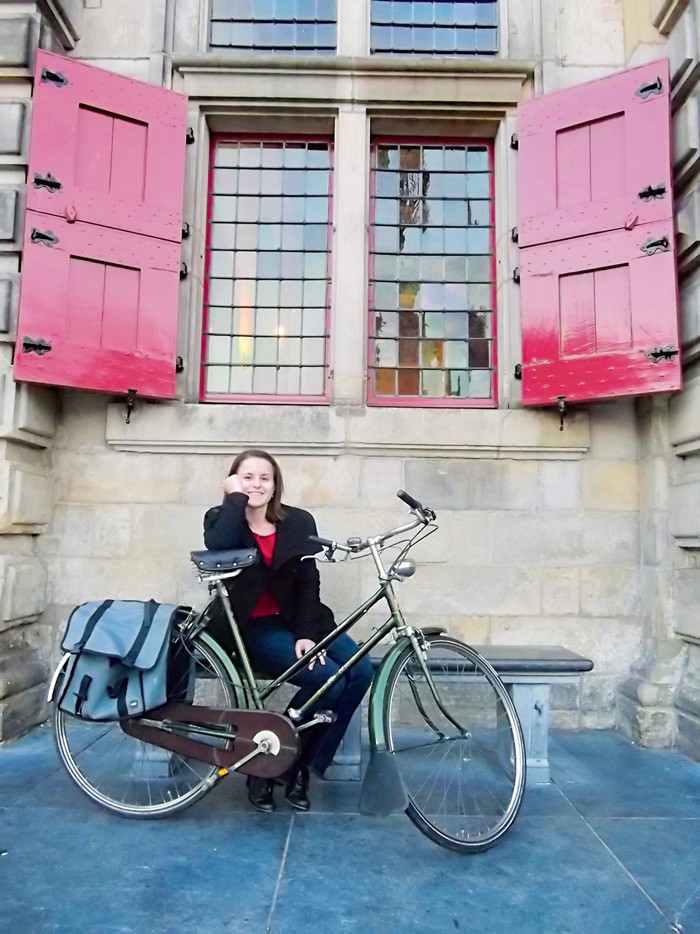
But my time in Delft was not yet over. I remained at TU Delft to take up a two-year research position. This time I am researching how natural polymers can be used to make artificial cartilage tissue for patients who need it replaced — a challenging project since I am learning how to set up a new lab for a new subject.
Cuschieri was awarded a STEPS scholarship for her Masters studies, which is part-financed by the EU’s European Social Fund under Operational Programme II — Cohesion Policy 2007–2013.



Comments are closed for this article!