
Skip to content

The floating lantern

Facebook
Twitter
LinkedIn

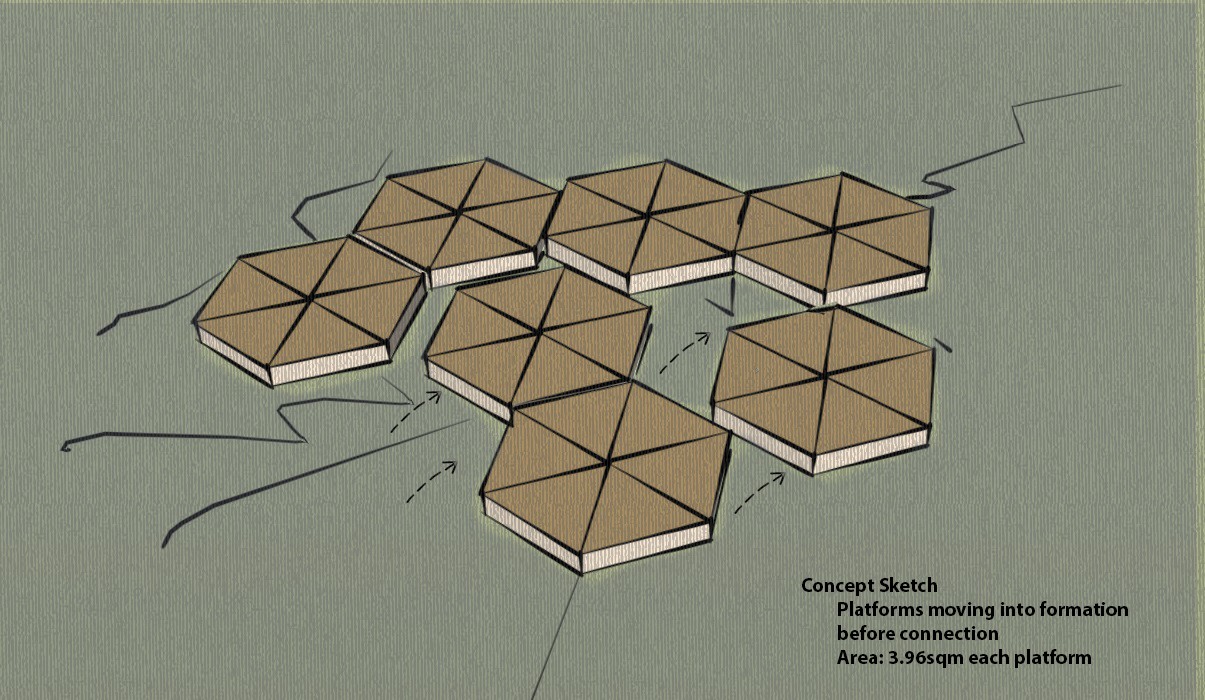
In Japan, candle-lit lanterns are released into rivers in Toro nagashi to guide the spirits of ancestors back to the other world. The lanterns exude beautiful, orange light as they float downstream. At times they group together, creating what look like small, glowing platforms. This very image was what inspired the floating platform Dr Rebecca Dalli Gonzi is building, together with her colleagues Dr Joseph Falzon, Prof. Tonio Sant, and NAS Limited. The project is being consulted with Prof. Claire DeMarco and ALTERN Limited.

By bringing together the sea, the arts, architecture, and engineering, they are giving rise to a lightweight platform that sits on the water’s surface, providing a unique space for artistic performances, installations, and exhibitions. The lanterns’ rectangular shapes are being replaced with hexagons—a more efficient fit. Holding everything together are mounts or magnetic currents, depending on research results. The modular approach allows adjustability in shape and size, potentially seeing the platform expand beyond its current three meters, while making it easy to disassemble, respecting the environment it inhabits.

The team hopes that the platform, or lantern as it is affectionately referred to, will provide artists and practitioners with a new approach to their art that will bring joy, while also inspiring creative thinking in the construction industry.

Author: Dr Rebecca Dalli Gonzi

Author

More to Explore

The Legacy of Press Freedom

At this year’s Mabel Strickland Memorial Lecture, international negotiator and mediator Nomi Bar-Yaacov argued that democracies are entering a period in which the crisis extends beyond censorship or attacks on journalists alone. As wars multiply, trust in institutions weakens, and information becomes increasingly mediated through algorithmic systems, the deeper problem may be that societies are losing their ability to agree on what is true in the first place.

Squeezing Out Waste: Transforming Malta’s Olive Waste into Green Goods

While olive oil production generates vast amounts of nutrient-rich waste, approximately 98% of the antioxidant-rich phenolics in olives are lost during oil extraction. To combat rapid degradation, the OliveGREEN team is exploring a novel strategy using sulphur dioxide and enzymes to stabilise olive pomace. THINK speaks with Dr Frederick Lia to learn why saving this discarded byproduct makes a difference.

More Than Four Walls: The Influence of the Library Space on Student Wellbeing

Academic libraries are often framed as quiet repositories of knowledge, but their influence runs deeper. As student mental health concerns intensify, these spaces are emerging as critical environments for connection, comfort, and care. Beyond books and databases, the design, atmosphere, and activities of a library can shape how students feel, cope, and belong within the wider university experience.

Comments are closed for this article!