
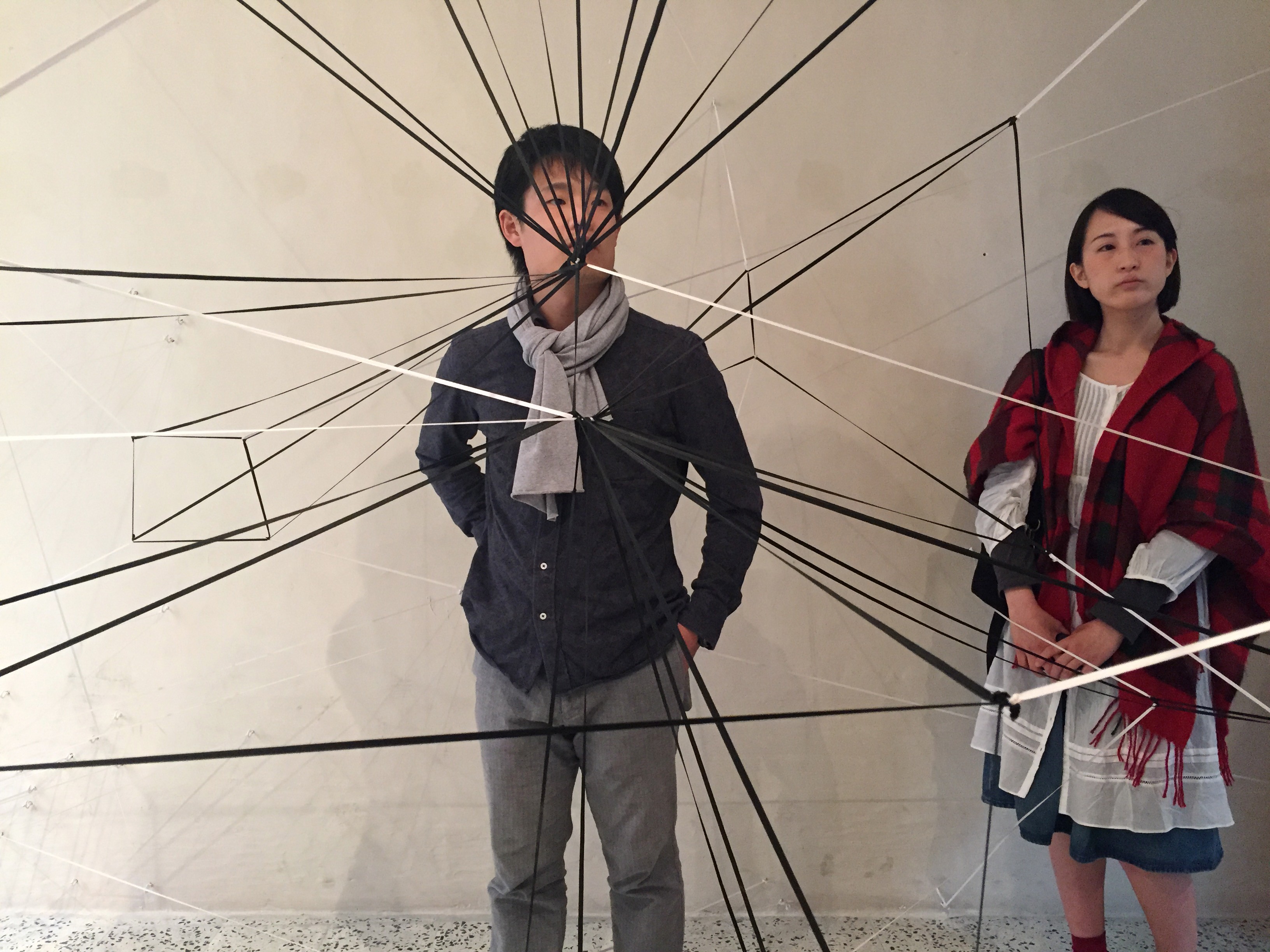
‘What does it really mean to sense something?’ That was the fundamental question Dr Libby Heaney (quantum physicist and artist) asked herself when she started working on Sensory Apparatus, currently on display at Blitz in Valletta. For almost a year she worked together with Bonamy Devas (artist and photographer) and Anna Ridler (designer working with information and data). For Libby sensing means the collection of data. Science tries to measure everything and is now through so-called ‘big data’ attempting to quantify subjective things, like happiness levels or the perfect online dating match.
 Sensory Apparatus visualises the constant surveillance our data is under. In the first room a web of elastic black and white fibres represents a network of light and data. The experience of traversing the space and interacting with the structure is like simultaneously being sensed and sensing the internet. ‘Like the internet, you are missing out if you cannot make it past the first room’, Libby suggests.
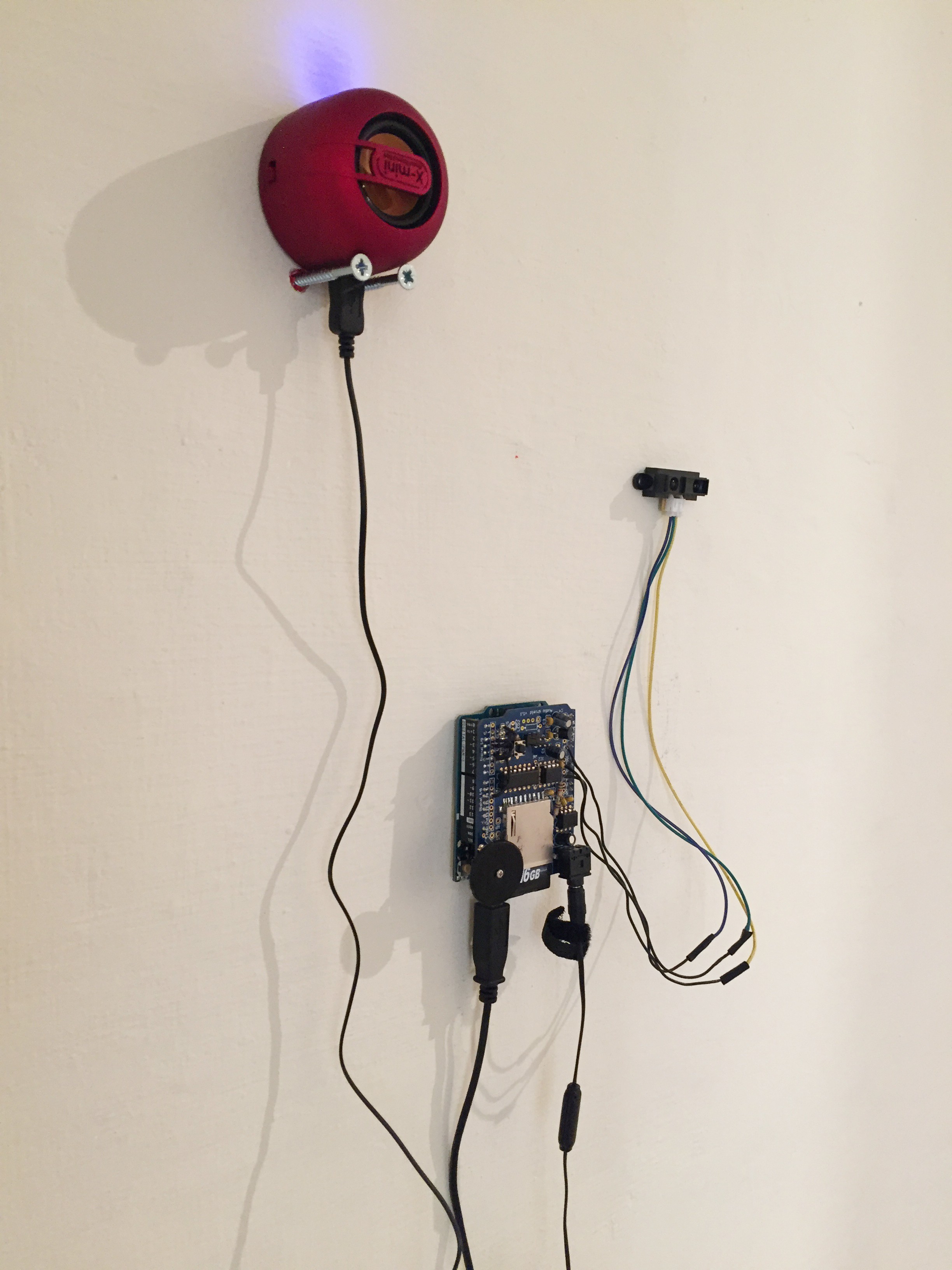
The second room has circuit boards and speakers mounted to the walls. People curious enough will trigger a proximity sensor and a computerised voice starts talking. ‘Name. Country. Age. Address.’ What sounds like nonsense at first, quickly develops into the auditive representation of an algorithm. Passing consecutive speakers continuously reveals its different layers. These algorithms are complex programmes, designed to collect the footprints people leave while online. The information is used by marketers to direct and personalise adverts. ‘We wanted to reveal the technology. The actual objects represent the discussion we are trying to make.’
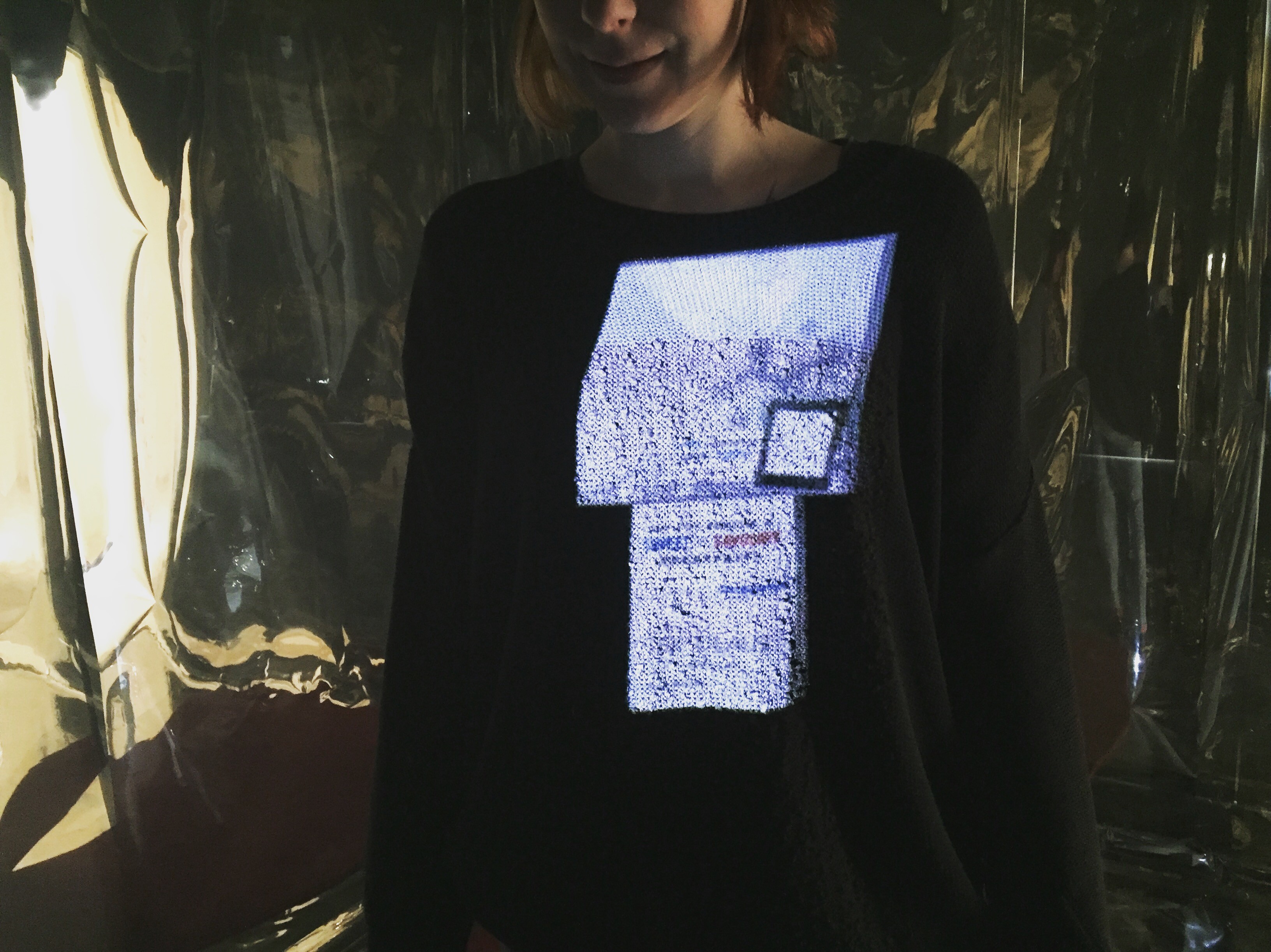
The last room is pitch black. Only when approaching the middle of the room a projector lights up, projecting advertisements directly onto people’s bodies. The commercial pieces, gathered from across Malta, follow every movement, change constantly and are reflected from the room’s glossy walls. At the exhibition opening, once people noticed they were being used as a billboard, they quickly moved away. ‘People change and behave differently in there’, Libby says, making it obvious how advertisements influence us online.
 As a quantum physicist this change in behaviour reminded Libby of the Quantum Zeno effect, a phenomenon where an unstable particle will not decay while it is being observed. For Libby the concept of surveillance and the philosophy behind it led her to Sensory Apparatus. French philosopher Michel Foucault came up with the idea of panopticism, that inspired the exhibition. Panopticism is a social theory extending the panopticon, a prison designed to allow one person to observe all prisoners. Inmates would know they are possibly being observed, but could never be sure. This ultimately changes their behaviour. Sensory Apparatus’ first steps can be relived in the educational room near the artworks. The artists’ personal notes, inspiring articles, and other materials are laid out for everyone to explore.
The free exhibition opens every Tuesday–Thursday from 10am–3pm and Friday–Saturday from 3–7pm at Blitz, 68 St Lucia Street, Valletta, until April 6. For more information see thisisblitz.com
Sensory Apparatus is supported by Arts Council Malta / Malta Arts Fund.



Comments are closed for this article!