
Think meets up with Dr David Magri to tell us more about how he is trying to help scientists and politicians to network. Evidence-based policies need the input of scientists from all fields and are the future for Malta’s policy makers to develop a better, richer, and happier Malta.
Q: In a small country like Malta were everyone knows each other, why do scientists and politicians need to network?
A: Even in a small country like Malta, people do not know everybody. In particular, scientists and politicians are two groups of individuals with busy schedules and different priorities. Because of the inherent nature of their professions, these two groups have no natural reason to meet. Scientists spend a considerable amount of time in their office, laboratory, in meetings, out on fieldwork, and at conferences. Politicians spend a substantial amount of time in their office, in the House of Parliament, at meetings, events, and attending conferences. However, for the nation’s interests, science and research policy is important for future competitiveness with regards to technical skills and human resources. Parliamentarians and governments set the national priorities for research, but researchers need to meet these research objectives. Researchers have a better understanding of what is feasible and what resources are needed.
“Scientists and politicians are two groups of individuals with busy schedules and different priorities”
Q:How are you trying to get them to engage?
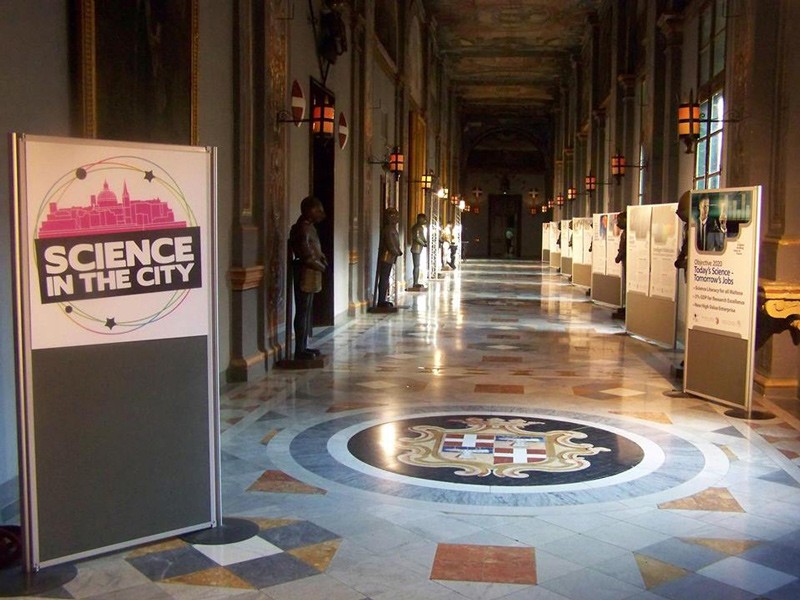
A: The Malta Chamber of Scientists has established Science in the House as a networking forum between scientists and parliamentarians. Under the auspices of the House of Representatives, Science in the House is also a poster exhibition highlighting some of the leading research conducted in Malta, particularly at the University of Malta. Now in its third year, the event continues to build momentum with greater participation every year. It takes place in the Presidential Palace in Valletta. This year a number of parliamentarians with science-related interests and backgrounds have been asked by personal invitation to attend the opening ceremonies of Science in the House.
Q:What is the role of Science in the House as part of Science in the City – European Researcher’s Night?
A: Science in the House is the opening ceremony for the Science in the City festival. During the weekend festival the Presidential Palace is open to the public in the evening. The poster exhibition is left on display for parliamentarians to view, and afterwards left on display over the Notte Bianca festival allowing the general public including students, parents, and tourists to view the exhibition. During the week an estimated 6,000 visitors viewed the exhibition last year.
Part of Science in the City, Malta’s Science and Arts Festival
For more stories click here
The event is supported by the Malta Chamber of Scientists, the RIDT University Research Trust, the University of Malta and the House of Representatives. For more information see
www.mcs.org.mt/index.php/events and on www.scienceinthecity.org.mt




Comments are closed for this article!