
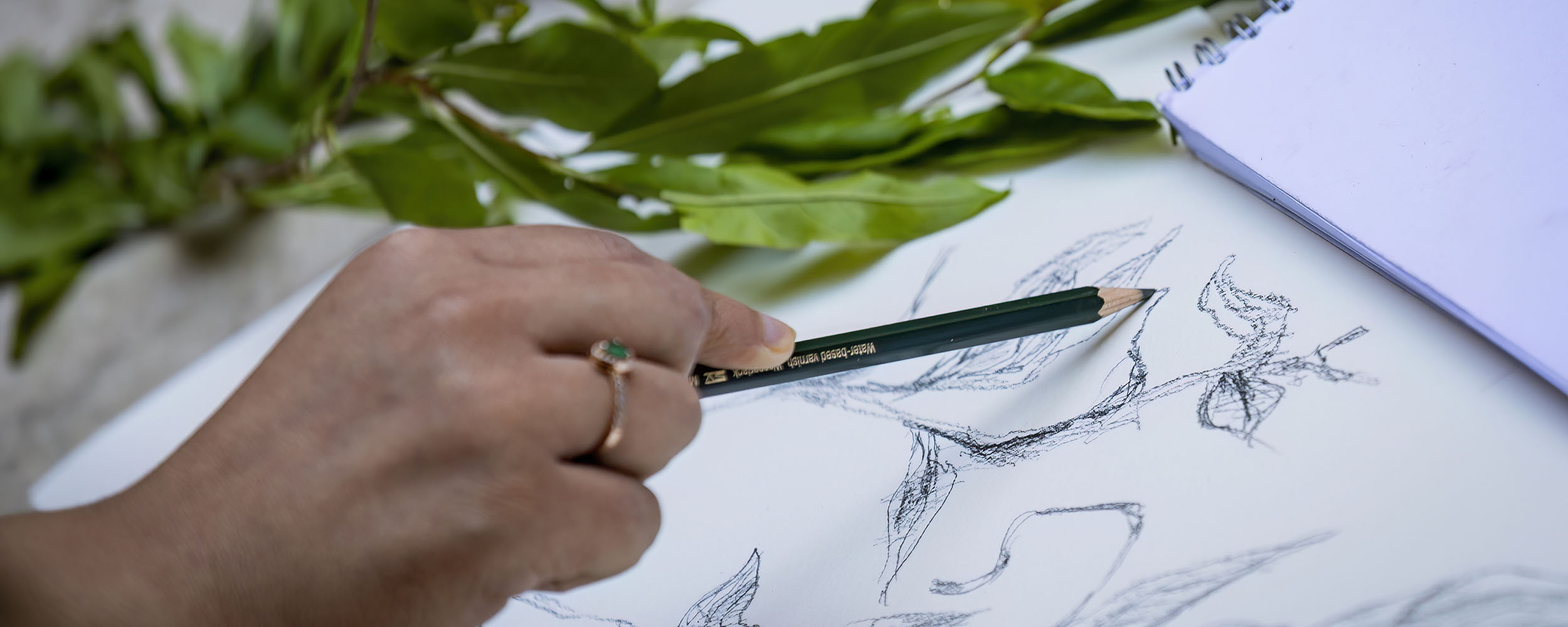
What happens when creativity becomes a way of navigating change? MatriART grew from a journey through illness, embodiment, creativity and self-discovery, and became an invitation for women to explore their own transitions. Through drawing, movement, fabric, storytelling, and play, twelve women came together to make, reflect and discover what might become possible when we give ourselves permission to listen, create and become.
Walking into the Unknown
It was 2018.
I found myself walking.
At first, it was simply a way to cope. A way to keep moving through a period of intense loss, when everything familiar began to fall away. It was a time when I became defined by my suffering and by the need to heal.
So I walked.
At night. At 2 am or 3 am. Through streets emptied of people and noise.
I photographed my shadow moving against walls, pavements, roads, double yellow lines and zebra crossings. There was something about those hours, suspended, quiet, almost unreal, where I felt more alive, more present.
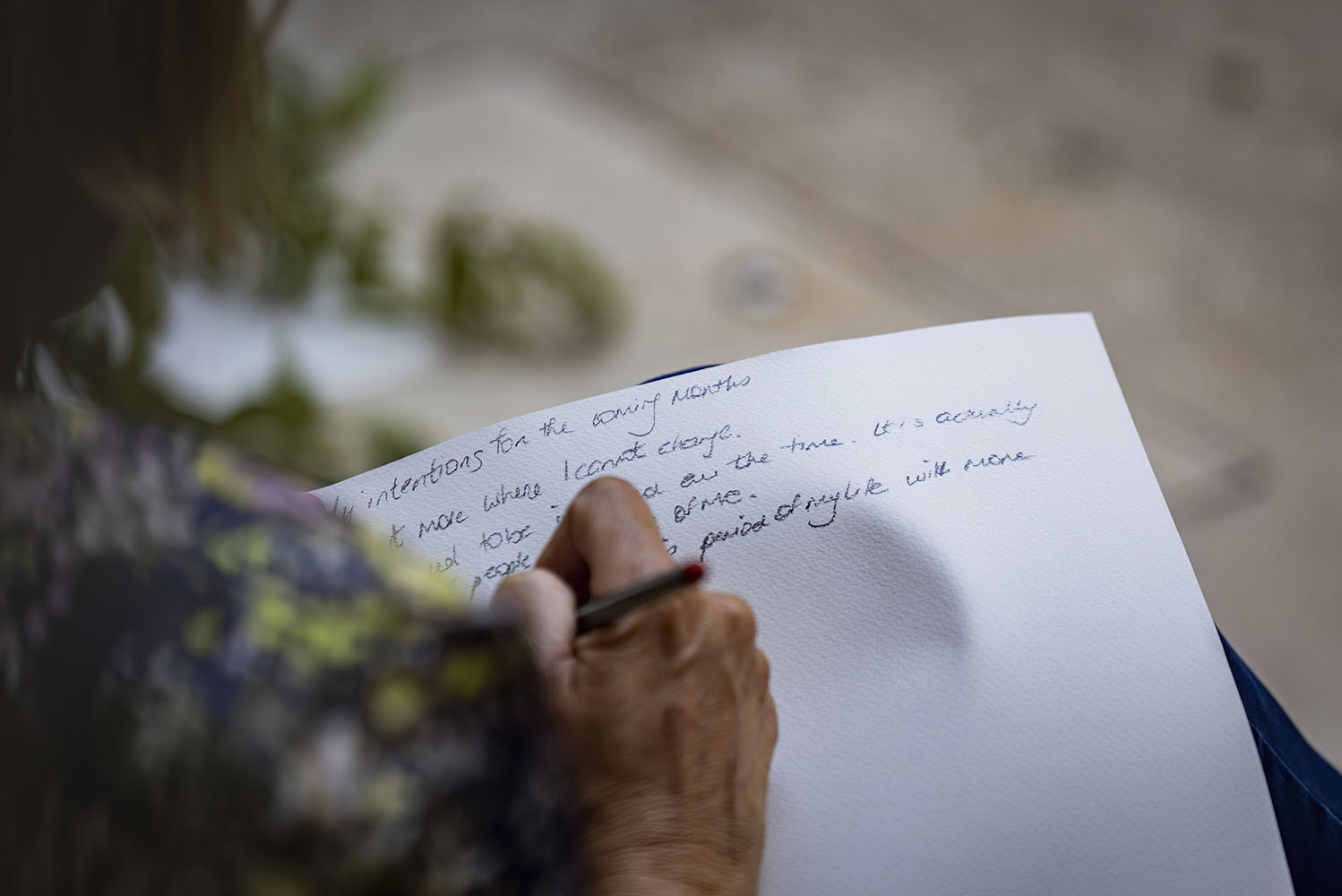
Just as I followed the road in front of me, I followed the line. I drew and wrote. Journalling became a way of recording thoughts, dreams and fragments of experience. Writing and walking became a release, a form of somatic witnessing.
Looking back, I think this was the beginning of a practice of encounter.
Finding Venus. Meeting the Wild Woman.
Through this collapse came a process of self-discovery. I began to work consciously through myths and archetypes, through artwork and writing, through dreams which I explored in a journal, peeling layer after layer of self.
Using collage, I worked with Venus, as a return to the body, a return to the suppressed feminine as something embodied and visible, a return to beauty. I had spent so long trying to move away from the body, from illness, from shame, from the abject. Venus represented a reclaiming of flesh, a rebirth of sorts.
But alongside Venus, another figure emerged: the wild woman. I encountered the woman I had been taught to suppress – the woman who was angry, desiring and powerful.
She was not tended like a horticultural garden; hashtagged, botoxed, styled and manicured. She carried knowledge that had been pushed to the margins – knowledge of the natural body, plants, dreams, cycles, intuition and transformation. She was the woman whose personal power liberated her and unsubdued her.
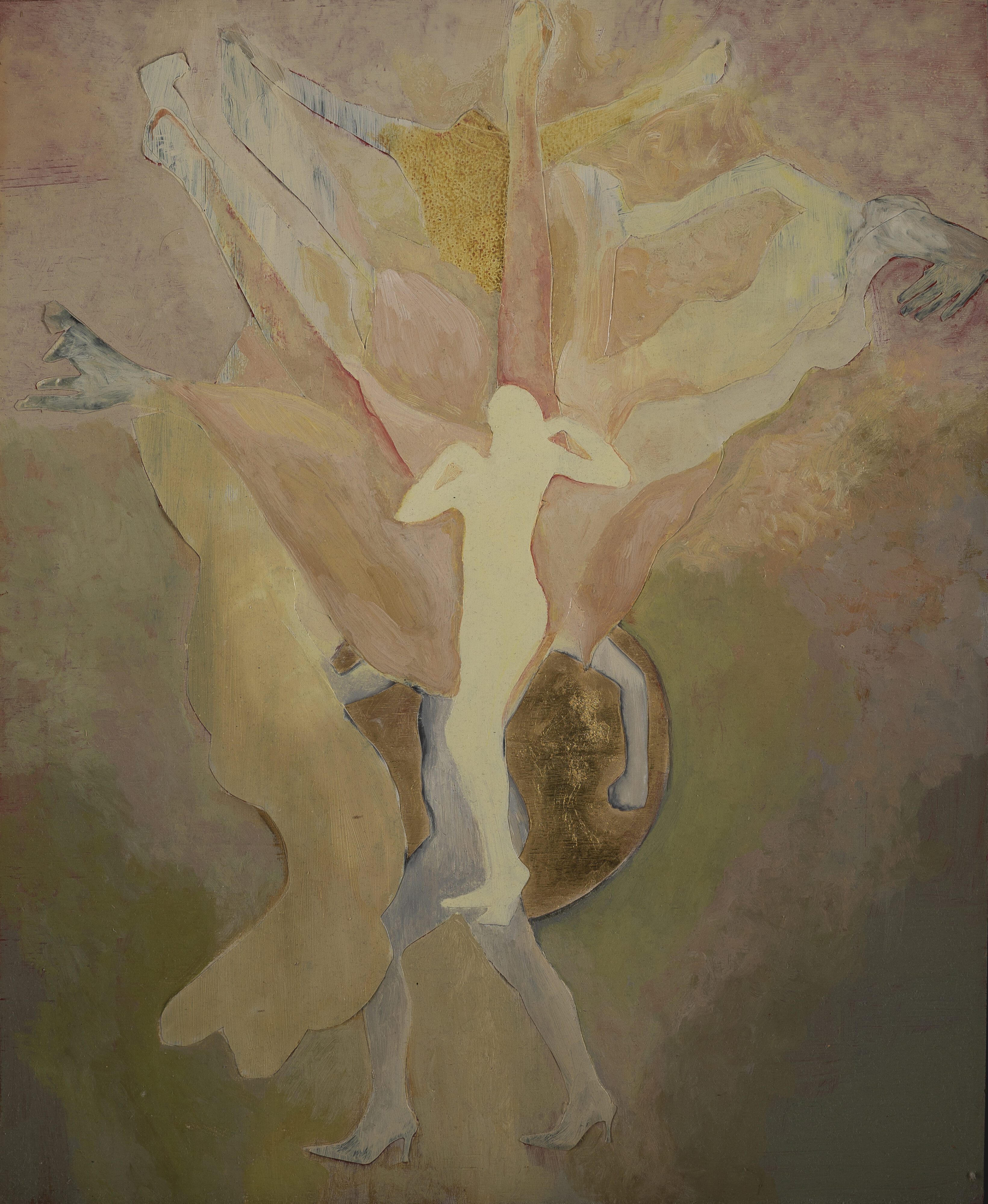
Oil, gold leaf, charcoal, paper on wood
Artwork by Pamela Abela (Photo by Therese Debono)
She was the matriarch.
I began to understand that these were not two opposing forms of womanhood. They were two aspects of a larger feminine presence.
Women are taught, from childhood, to be good girls. We learn that being seen and heard can depend upon how closely we conform to expectations of beauty, behaviour, achievement and femininity. In Unbearable Weight, Susan Bardo describes the female body as never simply personal; it is shaped by cultural expectations, social meanings, and histories of control.
Perhaps this is part of what MatriART was trying to create – not a model of what a woman should become, but a space in which different, sometimes contradictory parts of ourselves could be encountered without needing to be resolved.
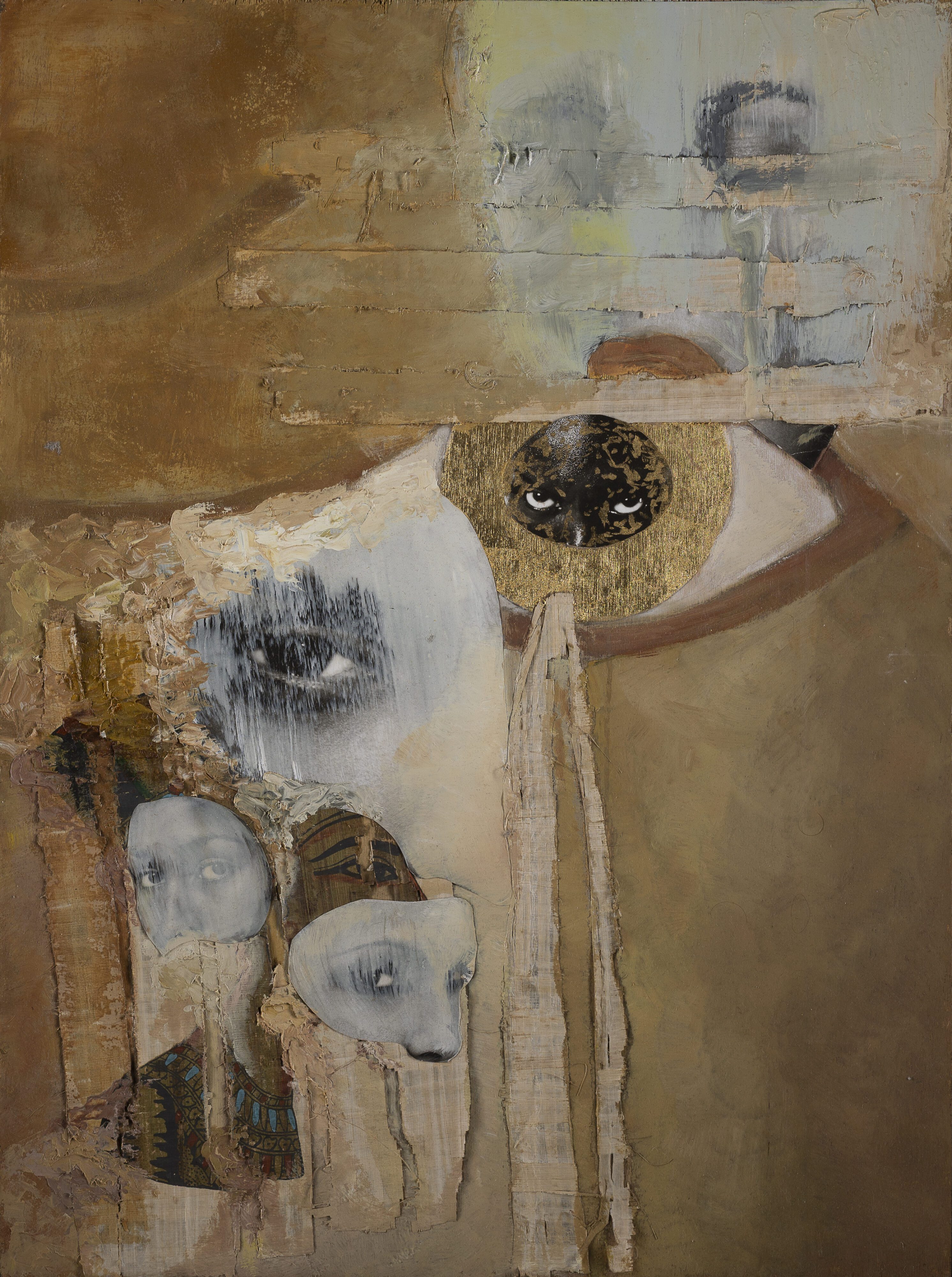
These figures have also become part of my ongoing auto-ethnographical research. I use my own experience not as a universal account of womanhood, but as a site of inquiry. Through reflection on illness, embodiment, dreams, images, myths and creative practice, I examine how personal experience can become a way of understanding wider questions about women, identity, transition and healing.
The Golden Eye, 56 x 75 cms (2023)
Oil, gold leaf, papyrus and paper on wood
Artwork by Pamela Abela (Photo by Therese Debono)
A Space of Encounter
From this personal inquiry, MatriART began to take shape.
I became interested in what might happen if the questions I had encountered through my own experience of creativity and female connection were opened into a collective space, where other women could find their own images, stories and forms of expression. Supported by female friends, the cathartic expression of artwork and writing created a kind of matrix, a network of holding.
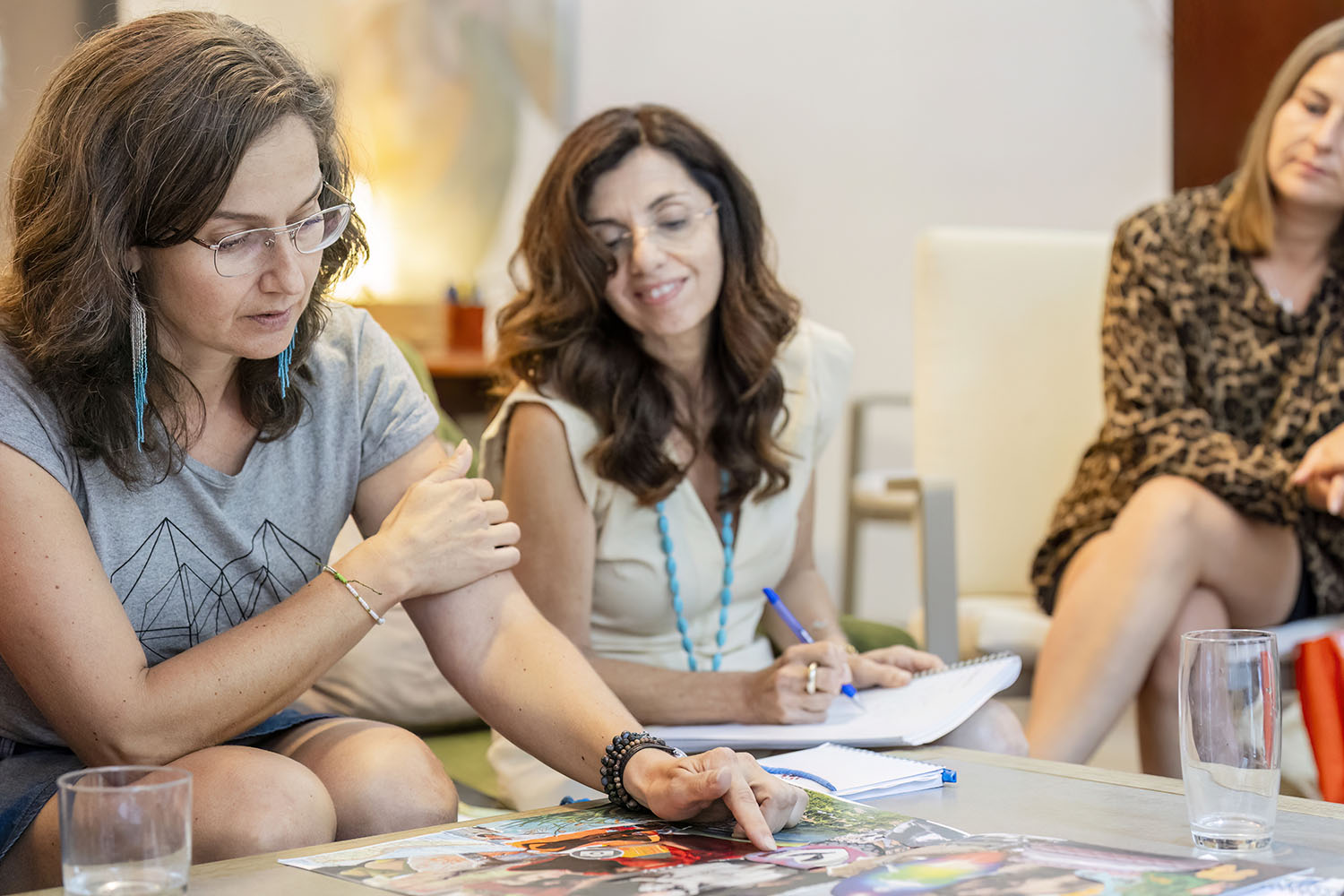
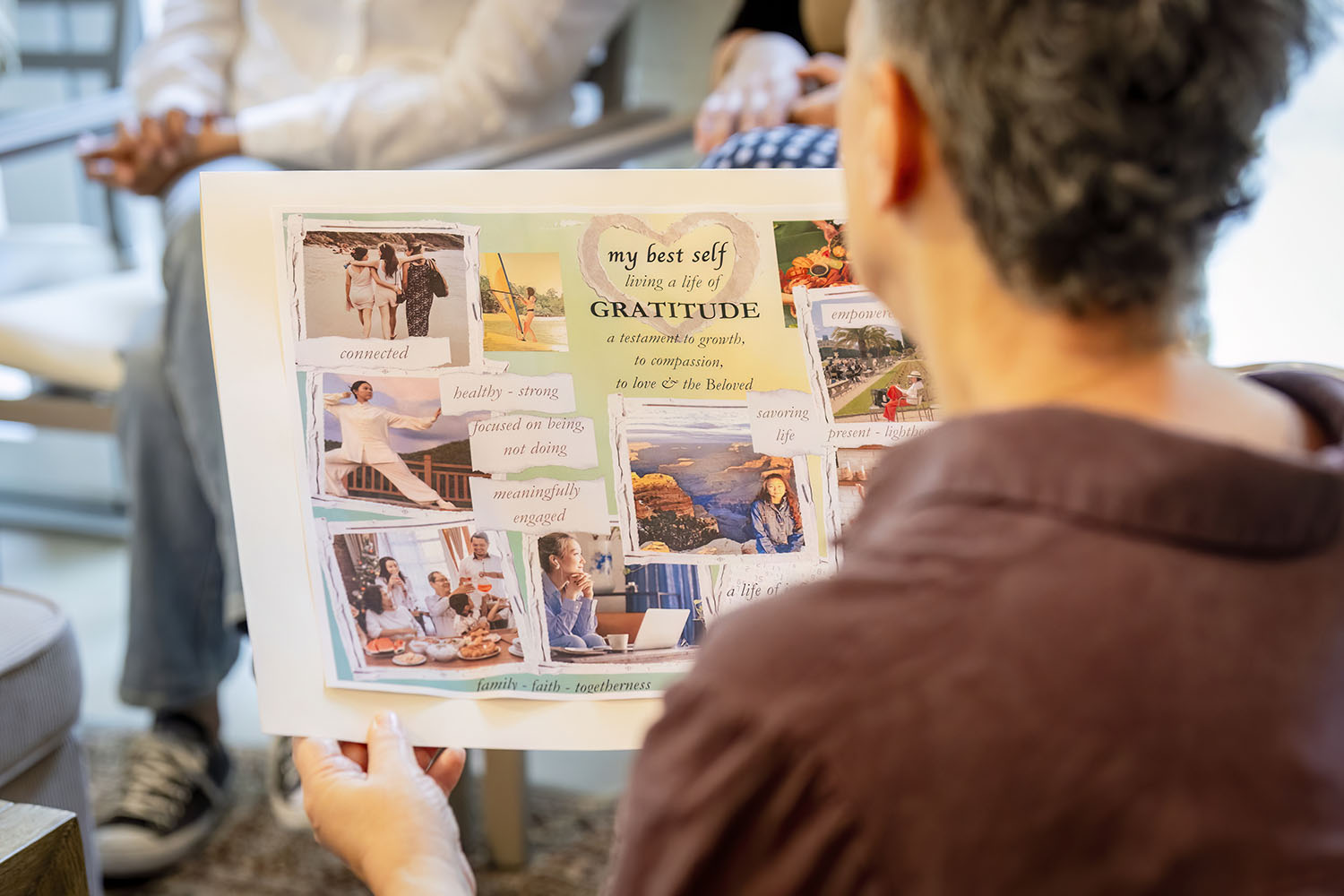
MatriART was formed as a space for women experiencing any kind of transition or changes related to family life, caregiving, ageing, health, employment, identity or relationships. I wanted to explore what might happen when women come together not simply to talk about their lives, but to make, move, draw, perform, imagine and create together. The project recognised participants as active contributors, drawing on their lived experience, creative potential and insight as central to both programme delivery and evaluation.
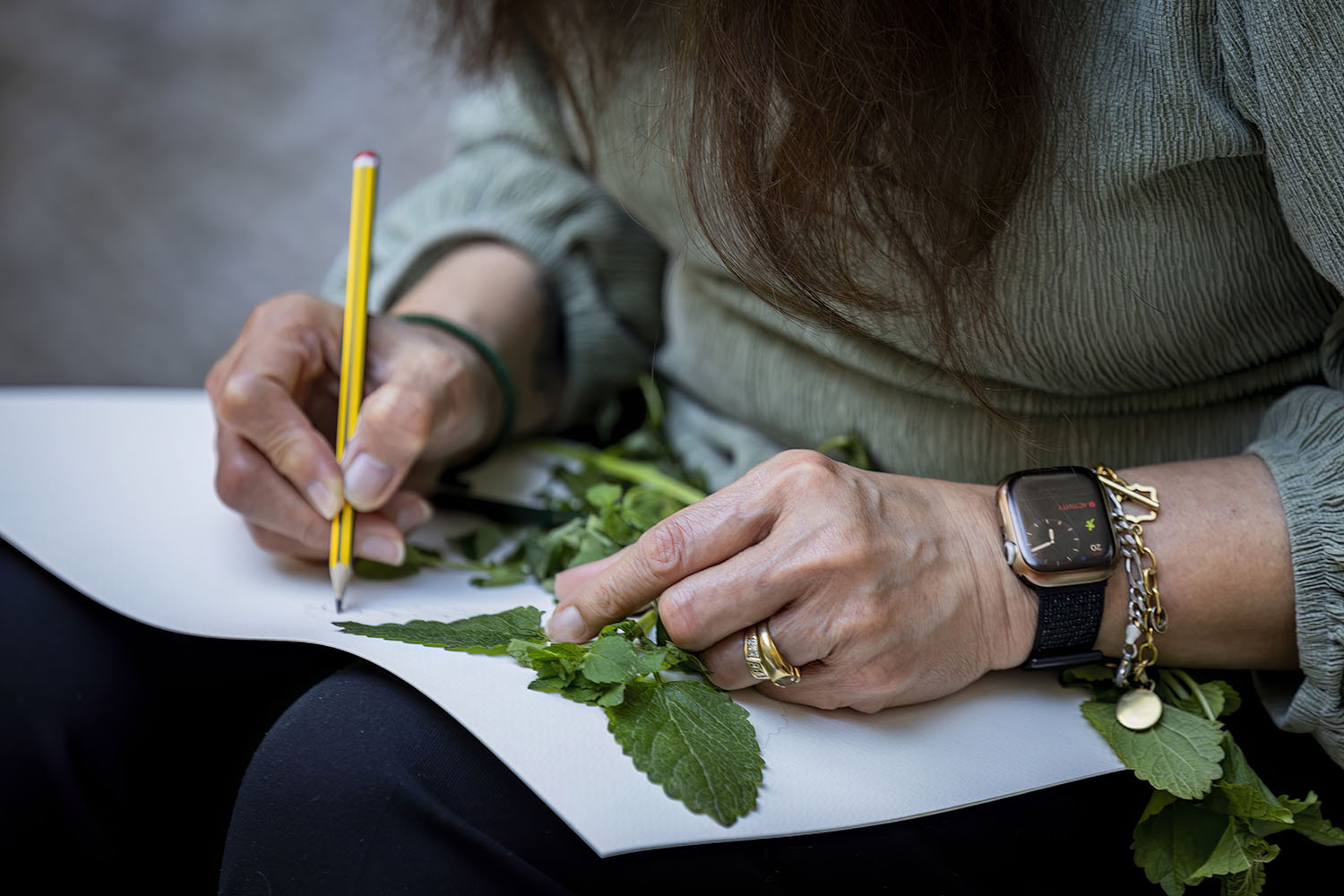
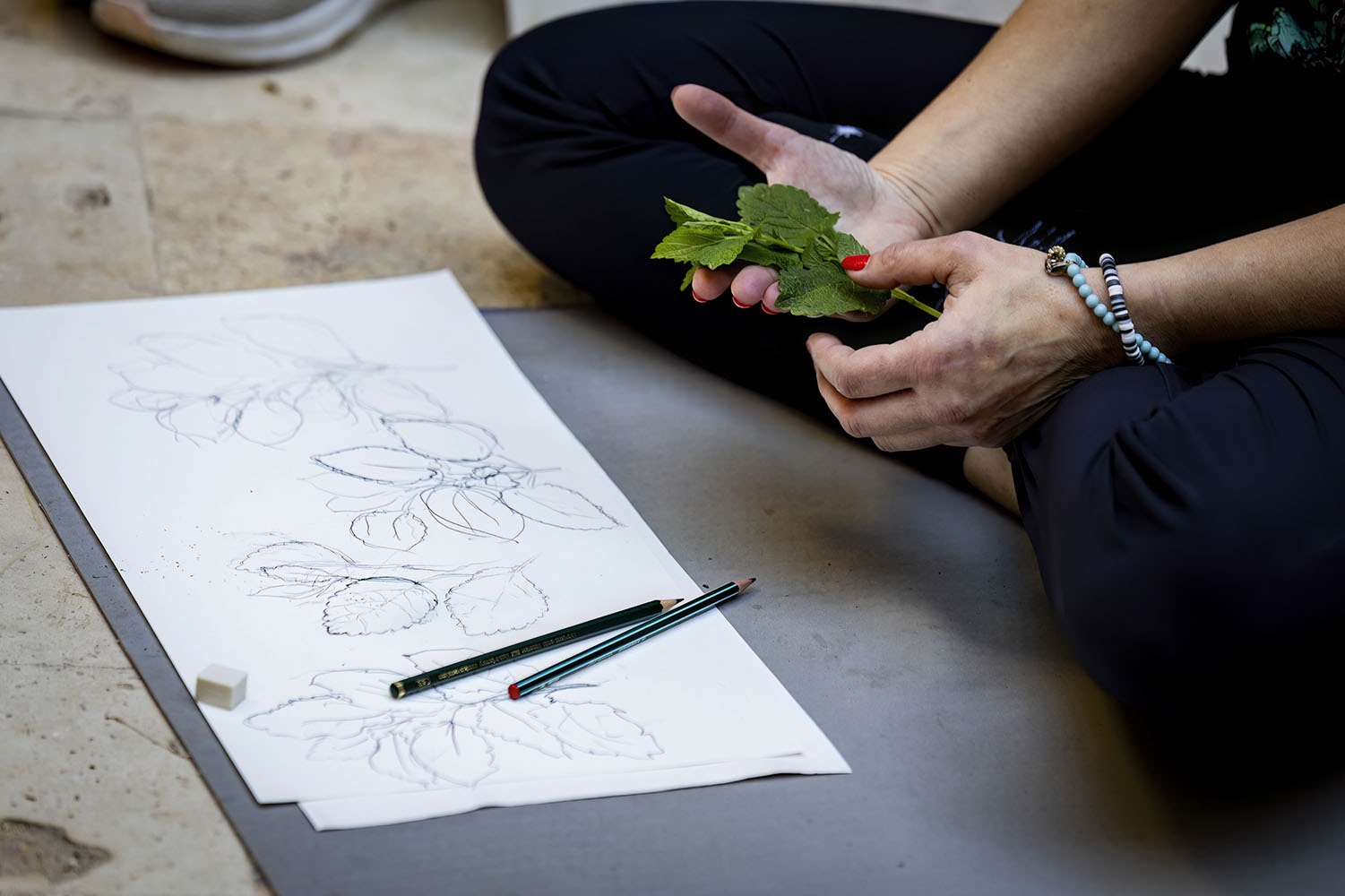
Six women led six workshops, working collaboratively in pairs (2 facilitators per session) across different creative and professional practices. Dr Sharon Martinelli introduced participants through visual aids, writing and the exploration of images. Anna Grima worked with drawing, observation, natural materials and intimate attention to the world around us. Caroline Tonna explored clothing, fashion history, fabric, identity and the stories carried by dress. Anna Formosa brought storytelling, drama, performance, and imaginative interpretation into the group, whilst Sarah Vella worked through embodied movement, objects, performance and play. Katryna Sammut Tagliaferro brought meditation, voice, breath, movement and elemental practices into the sessions.
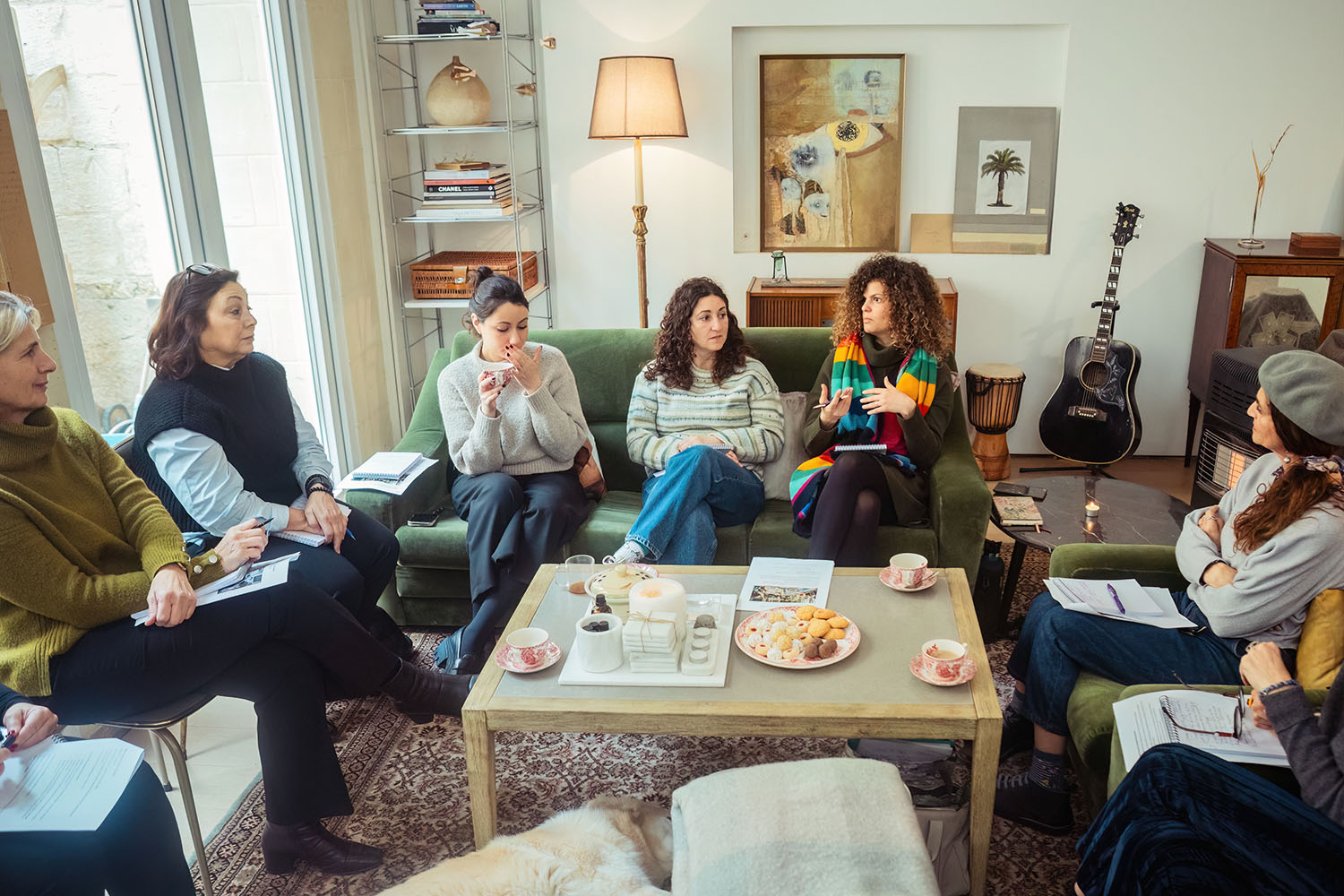
The project was led by a wider team. I worked as project and curatorial lead, shaping the concept, creating the space and bringing the creative and reflective strands together. Anna Borg Bartolo contributed mental health expertise and psychotherapeutic support, while Rowena Sultana provided community and research support.
The approach was gentle, not forced. There was no expectation for the group to produce something, disclose anything or become someone else.
Making, Moving, Playing
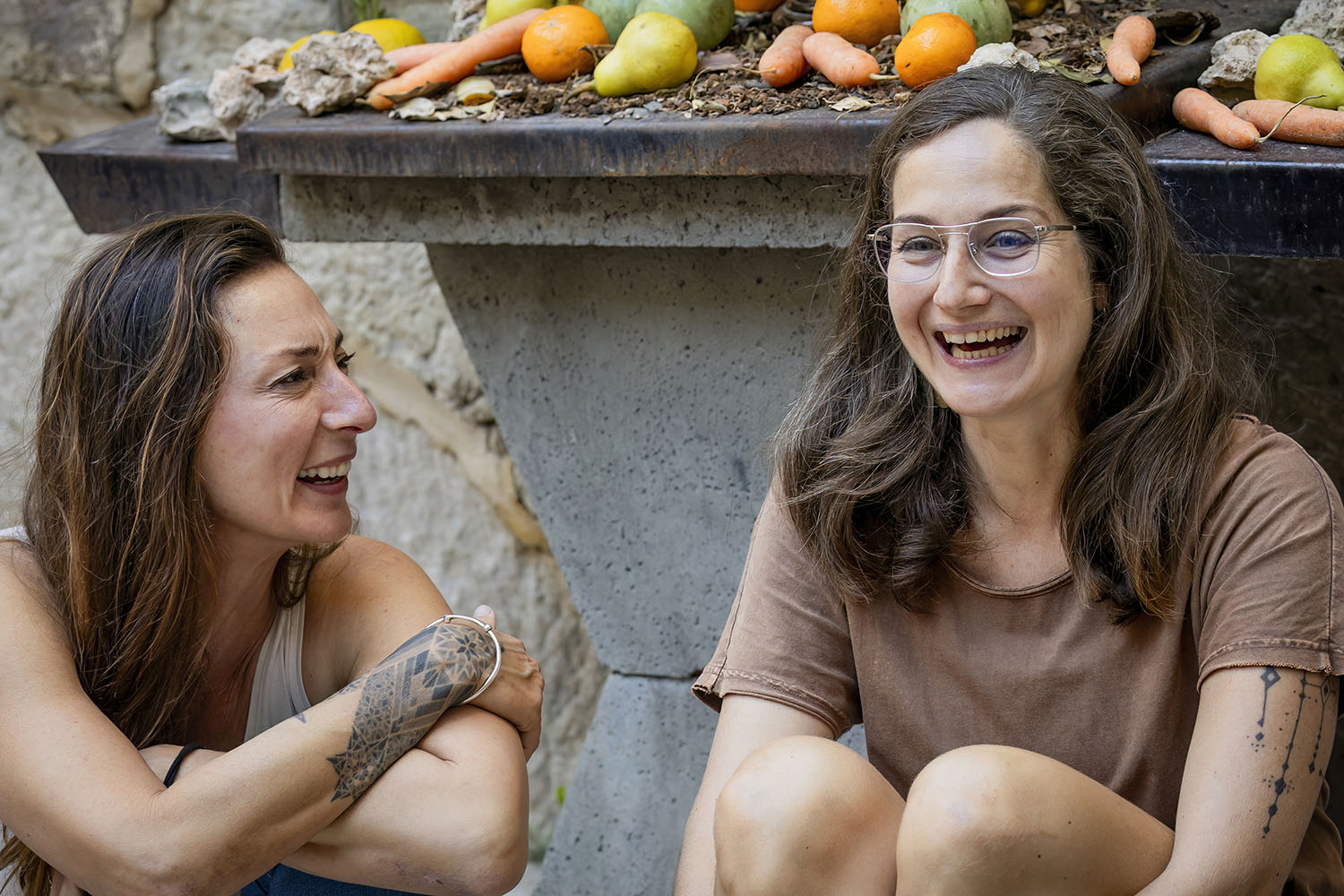
Women drew together on a shared sheet of paper. They worked with leaves and herbs, being present in the act of looking. They created garments from pieces of fabric, built stories around clothing and performed characters inspired by old photographs. They moved with coloured fabric, throwing it into the air and watching it fall and rise.
One participant described drawing as making her feel ‘in love’. Another said, ‘It makes me lose sense of time.’
During a movement workshop, I wrote in my own notes: ‘Movement liberates me, and ease flows through my body. I feel the fabric fall and rise, the colour caresses me. I become childlike, lost in the movement.’
The laughter and the joy felt liberating, and the inner child emerged through play.
Again and again, the women spoke about what they were able to leave behind and what they wanted to carry with them. One said, ‘I would like to leave self-doubt and take the feeling that it’s okay to be silly, not to be self-conscious.’ Another said, ‘I’m taking the playfulness of the group.’ Another wanted to leave ‘the overthinking, the doubts, the rigidity’ and take ‘listening to my body’.
What became increasingly evident was that creativity was not simply an activity taking place within the workshops. It became a way of relating, a way of becoming and being present to oneself and to others.
Women who had not considered themselves creative began to enter into play. A participant who initially said, ‘I’m not good at drama. I was very, very, very shy,’ later immersed herself in movement and performance. Others discovered that making something together could quickly create a sense of familiarity.
The Sailing Boat
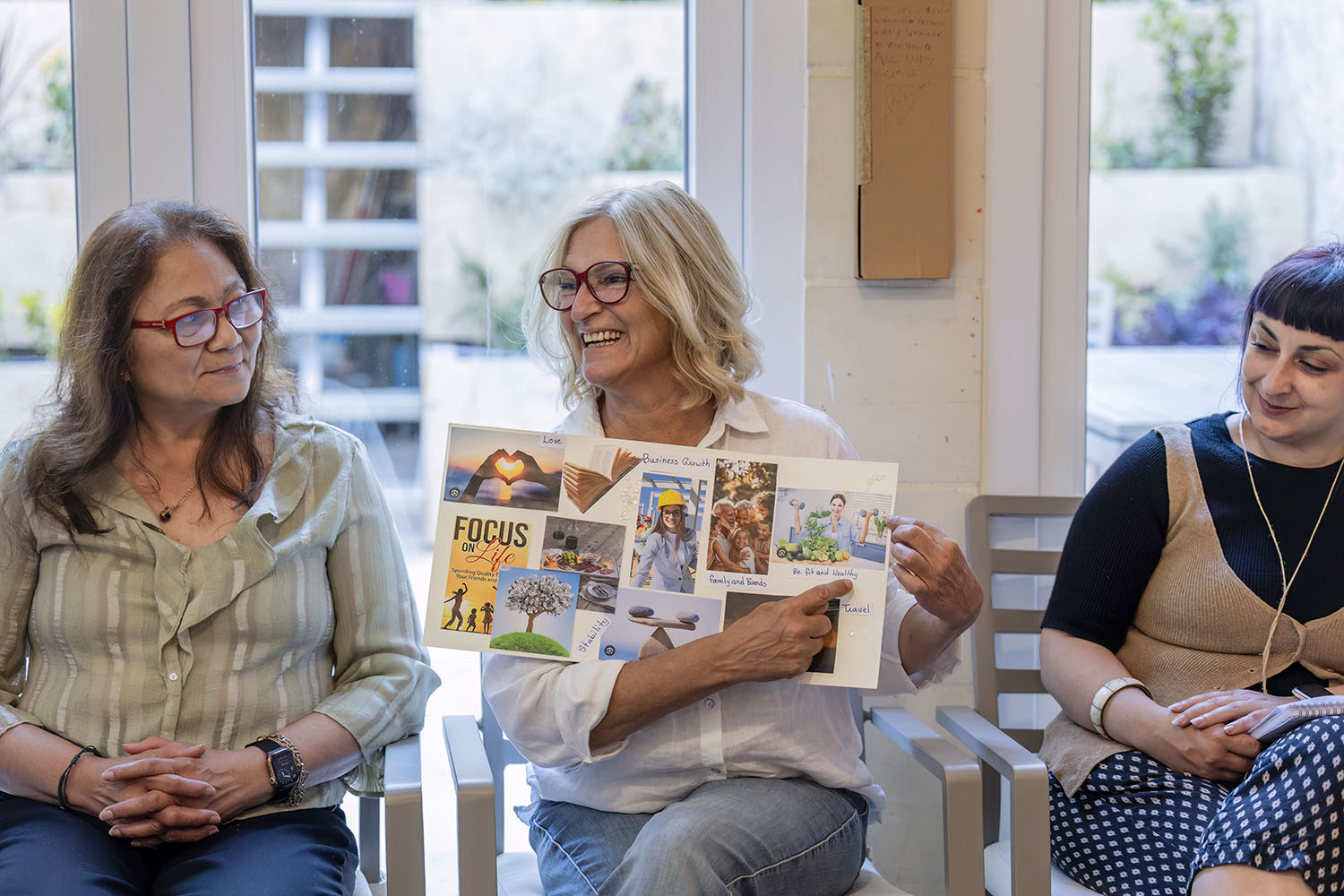
One woman described spending an entire Sunday morning trying to create a vision board. Nothing came. She drew herself trapped inside a circle and remained there for three hours, frustrated by what seemed to be an unproductive morning.
Eventually, she went swimming in the harbour.
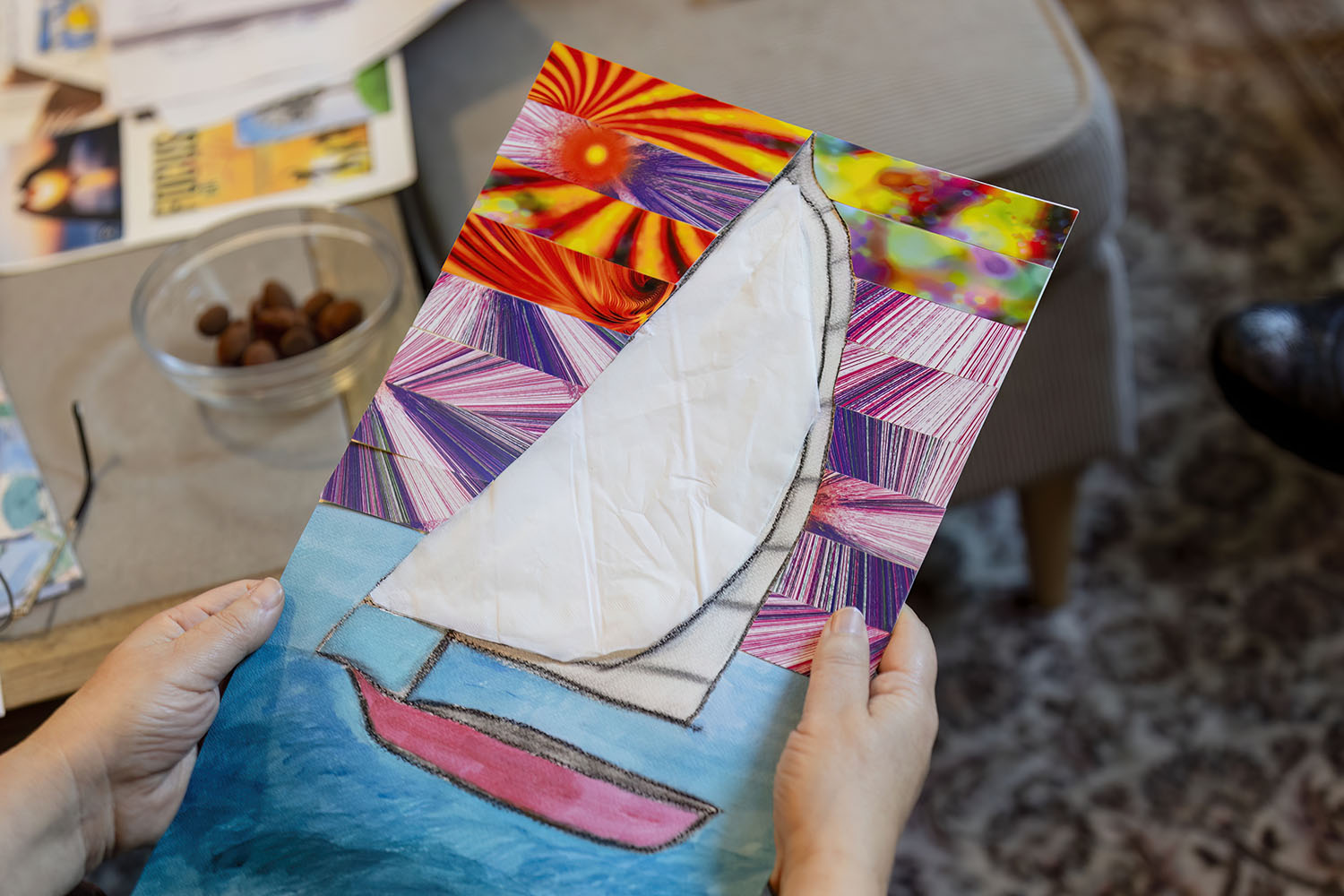
She noticed the sailing boats. Some sails collapsed. Some boats seemed to move in directions other than those intended. She realised that perhaps this was simply the nature of life. She went home, wrote a poem and created her vision board. At its centre was a sailing boat.
She was the sailing boat.
This image stayed with me because transition is rarely a straight line. We may imagine that we are moving towards one destination, only to find ourselves somewhere else. Sometimes we are stuck. Sometimes we have to leave the room, go swimming, walk, draw or simply wait.
Creativity as a Way of Becoming
Perhaps creativity offers a way to stay present during times of uncertainty, switch off anxiety mode, and feel a sense of belonging.
Fancourt & Finn (2019) describe the contribution of arts engagement to health and wellbeing as enabling social connection, emotional expression and the creation of meaningful experiences. But within MatriART, creativity was not presented as a cure or a solution. It was a way to open a space for encounter.
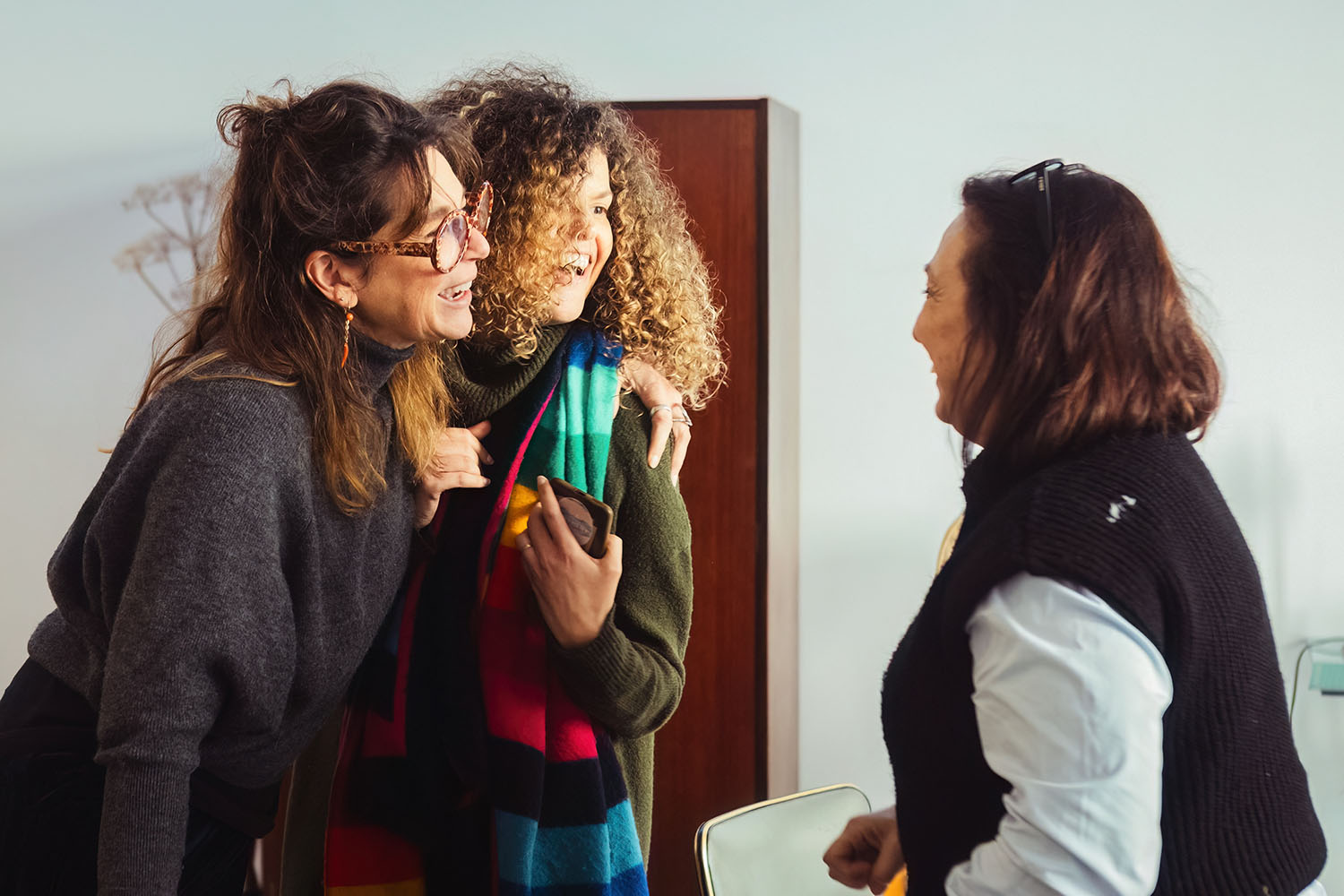
At the end of the programme, the women spoke about continuing to meet. They did not want simply to gather and talk. They wanted to keep doing things together: going to the beach, baking bread, attending a Tai Chi session, sharing skills and exploring new experiences.
One woman said, ‘The workshop is the gift that keeps on giving.’
I think this is what I had been searching for long before MatriART had a name.
Not a cure.
Not a formula for becoming a better version.
Perhaps simply a space in which we can listen to what is already there, a space where we can be our true self.
A space to be present, to bear witness, to become.
The MatriART program is supported by the Culture and Health Platform (Culture Action Europe) in collaboration with Arts Council Malta and ARC Research & Consultancy.
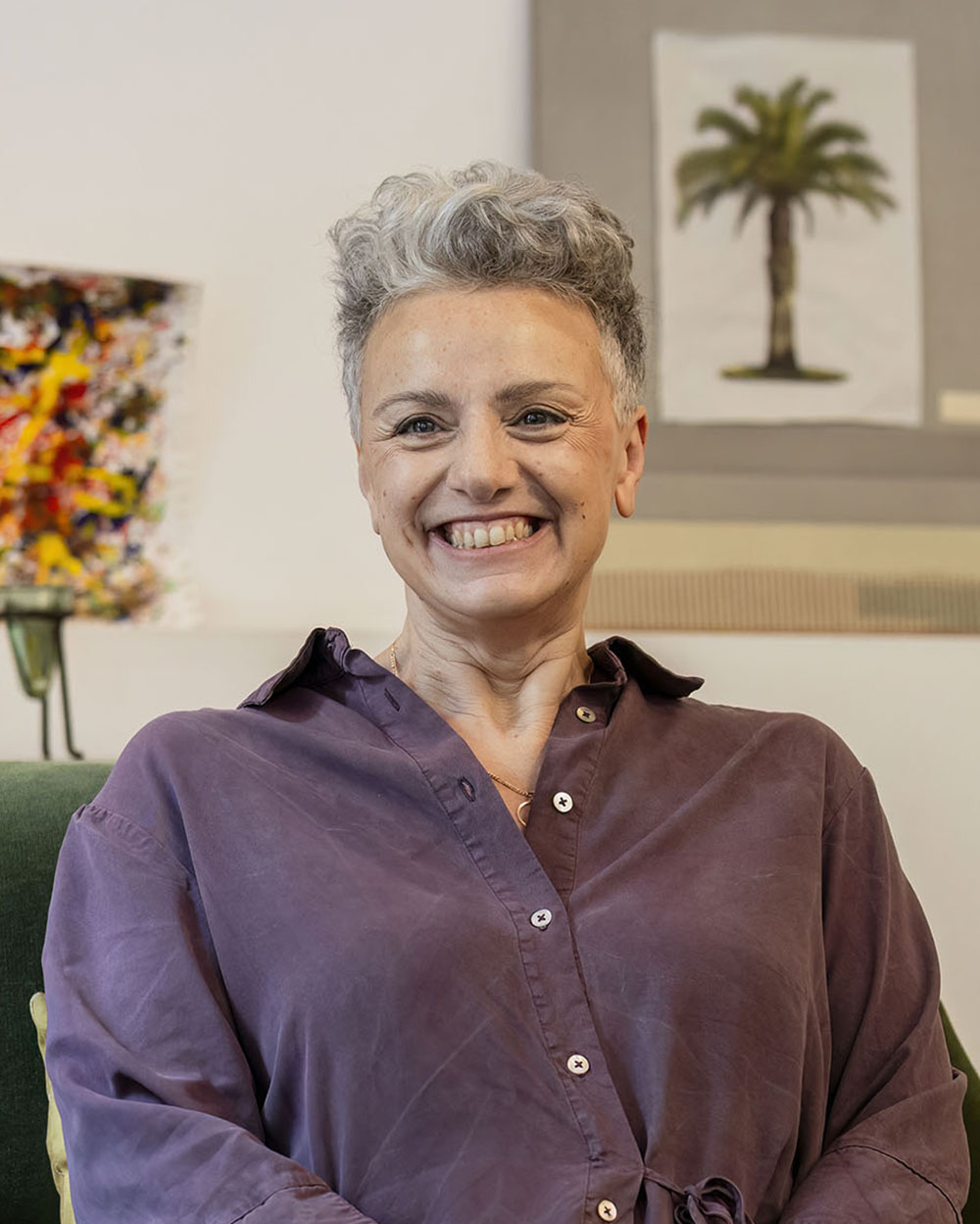
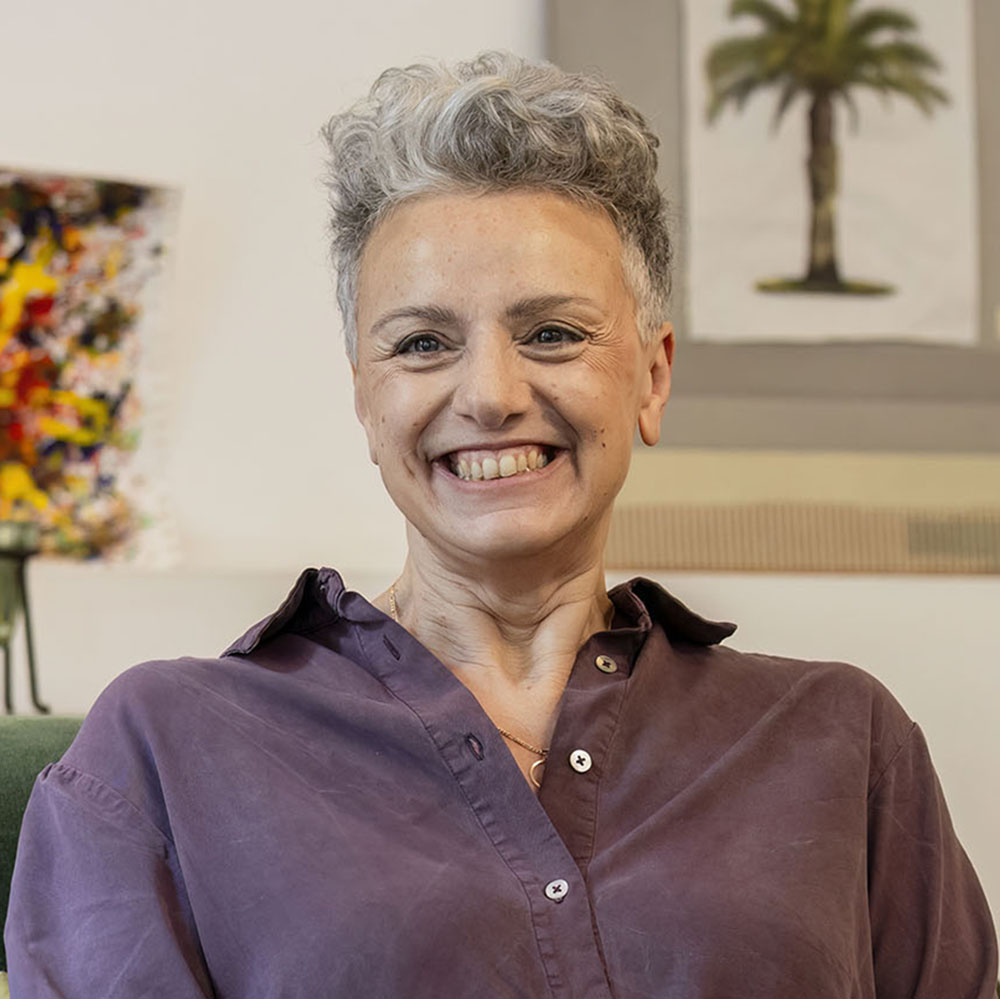
Pamela Abela is an artist, curator and nurse whose practice explores the intersection of art, health, participation and therapeutic environments. Through Curare Studio, she develops interdisciplinary creative health projects that bring artistic practice into dialogue with healthcare, research and community. MatriART emerged from this ongoing inquiry into creativity, embodiment, women’s experiences and wellbeing.
Further Reading
Bordo, S. (1993). Unbearable weight: Feminism, Western culture, and the body. University of California Press.
Ellis, C. (1997). Evocative autoethnography: Writing emotionally about our lives. In W. G. Tierney & Y. S. Lincoln (Eds.), Representation and the text: Re-framing the narrative voice. State University of New York Press.
Ellis, C., & Bochner, A. P. (2000). Autoethnography, personal narrative, reflexivity: Researcher as subject. In N. K. Denzin & Y. S. Lincoln (Eds.), Handbook of qualitative research (2nd ed., pp. 733–768). Sage.
Fancourt, D., & Finn, S. (2019). What is the evidence on the role of the arts in improving health and well-being? A scoping review. WHO.


Comments are closed for this article!