

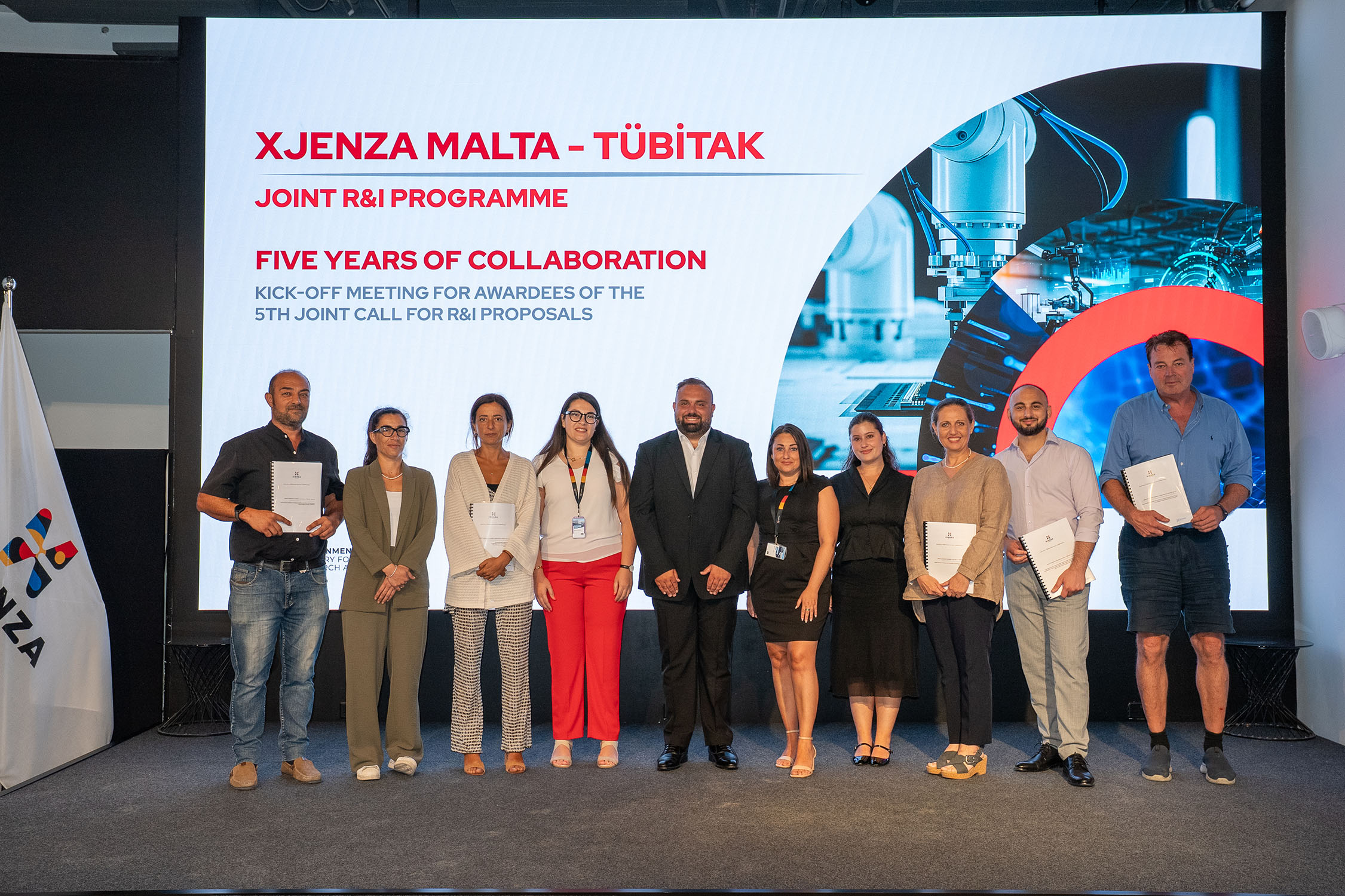
A kick-off meeting, organised by Xjenza Malta on 28 July 2026, marked the launch of five new research and innovation (R&I) projects that foster greater collaboration between Malta-based researchers and partners in Türkiye. The projects, awarded funding under the fifth Xjenza Malta–TÜBİTAK Joint Call for R&I Proposals (2025), cover a range of research areas, including aviation, health, water management, and farming systems.
During the meeting, team representatives presented their project objectives, outlined implementation plans, and introduced the Turkish partners with whom they are collaborating. On the Maltese side, three of the projects presented at the meeting are led by University of Malta researchers, while the other two are led by private-sector entities, namely WES Trade Ltd and the Mediterranean Institute of Innovation, Communication and Technology (MIICT).
Xjenza Malta also briefed participants on the monitoring process that will support the projects throughout their duration. This process ensures that progress, deliverables, and the use of public funding are closely followed as the research moves from its initial stages towards the planned outcomes.
The successful projects reflect a strong balance between public-sector academic participation and private-sector engagement, showcasing the Xjenza Malta–TÜBİTAK programme’s versatility in supporting a diverse range of research, innovation and collaboration.
Five Years of Malta–Türkiye R&I Cooperation
The Xjenza Malta–TÜBİTAK programme and the project funding arising from it form part of a bilateral cooperation framework established in 2020, when Xjenza Malta and the Scientific and Technological Research Council of Türkiye (TÜBİTAK) signed a Protocol for Cooperation in Science, Technology and Innovation. The agreement aimed to strengthen R&I cooperation between Malta and Türkiye through jointly funded projects, with both agencies providing financial support to researchers and organisations based in their respective countries. Since then, six Joint Calls for R&I Proposals have been launched. Five of these have been completed, resulting in the funding of 19 collaborative projects. The eligible proposals submitted to the 2026 Call are currently undergoing technical evaluation by experts, and the outcome of the Call is therefore still pending.
The Programme was initially designed to strengthen Maltese and Turkish participation in calls launched by the Partnership for Research and Innovation in the Mediterranean Area (PRIMA). It supported smaller bilateral projects aligned with PRIMA’s thematic priorities to address common challenges in the Mediterranean, helping Malta-based and Türkiye-based researchers develop their ideas into PRIMA-ready proposals involving larger international consortia. The first Joint Call launched in 2021 focused on water management, farming systems and agri-food value chains – areas central to PRIMA’s mission to develop research-driven solutions for water availability, sustainable agriculture and food production across the Mediterranean.

Since then, this bilateral Programme has expanded progressively. In 2023, health, smart manufacturing and digital technologies were added, reflecting shared national priorities and creating opportunities for researchers and entities outside the original PRIMA themes. The fifth Joint Call, launched in 2025, introduced a two-pillar structure. The first pillar retained the PRIMA focus, while the second pillar focused on broader shared R&I priorities including the aforementioned health, smart manufacturing and digital technologies, with particular interest in artificial intelligence and machine learning.
Interest in the Programme has grown alongside its scope, with recent calls attracting almost three times the number of applications as the first call in 2021. Calls offer Malta-based participants funding of up to €100,000 per project from Xjenza Malta, with corresponding funding provided by TÜBİTAK to Türkiye-based partners. This funding structure enables bilateral consortia to transform research ideas into collaborative projects with the potential to deliver meaningful results.
Complementary Expertise Strengthens Bilateral Research
The value of this internationalisation programme lies not only in bringing entities from Malta and Türkiye together within the same consortium, but also in enabling them to combine specialised expertise and access to facilities that may not be available within a single organisation. Take, for example, the project titled ‘Real-time monitoring of microwave ablation zones for personalised oncological treatment – ABLAZE’, which was funded through the fourth Xjenza Malta–TÜBİTAK Joint Call for R&I Proposals, and developed through an existing European research network. This was based on a collaboration between the UM and Boğaziçi University and was built around their complementary expertise in biomedical electromagnetics. The partnership demonstrates how bilateral funding can help researchers build on an initial scientific connection and establish a stronger platform for long-term collaboration.
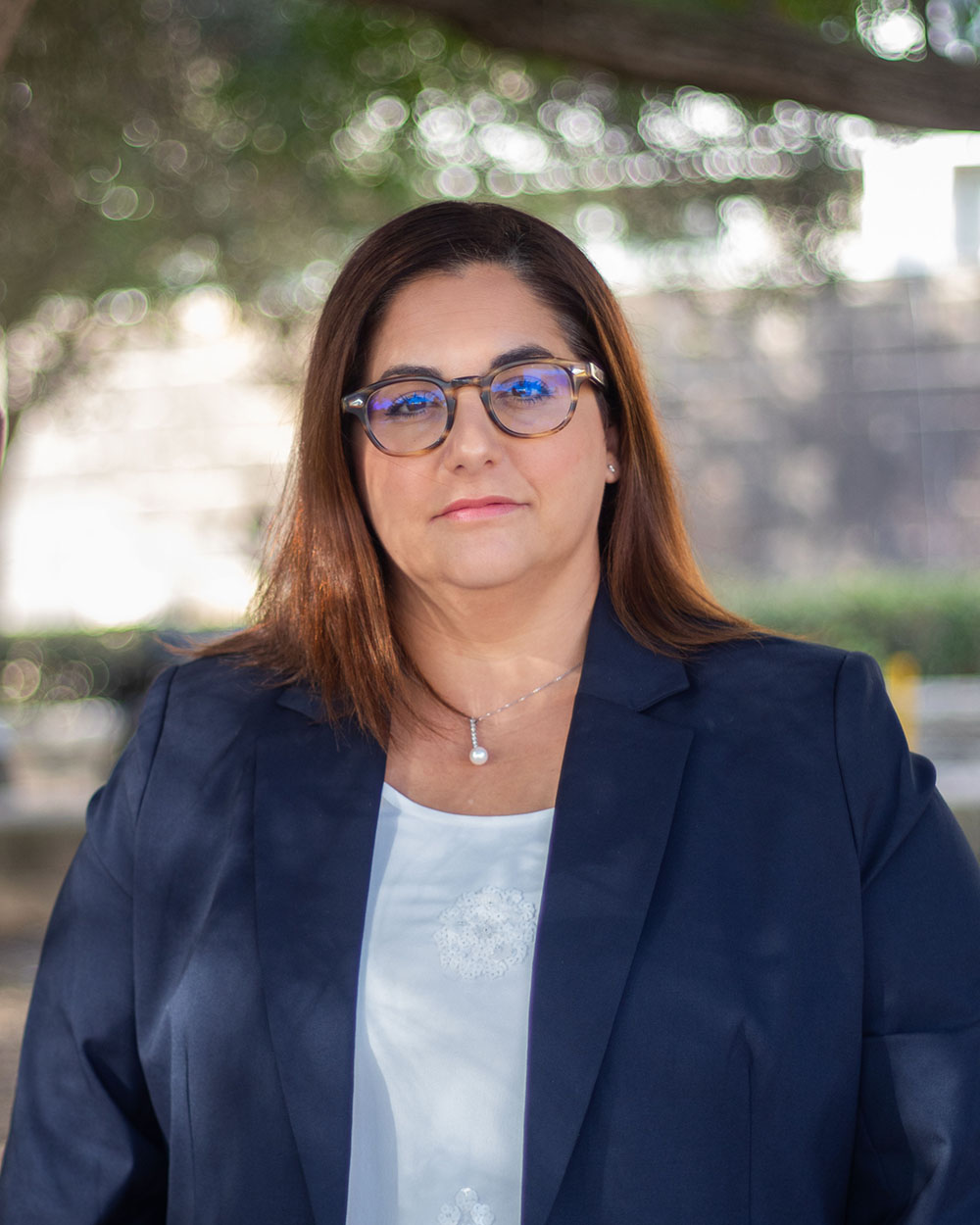
Our collaboration with Boğaziçi University in Türkiye originated through the COST Action MyWAVE. Our expertise and laboratory facilities are highly complementary. While we both work in the field of biomedical electromagnetics, we each bring unique capabilities that, when combined, create a much stronger research platform than either institution could achieve independently.
— Prof. Lourdes Farrugia, Principal Investigator, ABLAZE
From Research Collaboration to Practical Application
The Xjenza Malta–TÜBİTAK programme is tailored to strengthen the capacity of participating organisations by supporting equipment and research personnel costs, while creating opportunities for early-career researchers to develop within an international research environment. In another collaboration, a project titled ‘3D manufacturing of developed sustainable coating materials for building retrofitting and energy efficiency – SMACORT’, funded through the third Xjenza Malta–TÜBİTAK Joint Call for R&I Proposals, the research support enabled through the project also fed directly into doctoral training and links with doctoral students in Türkiye.
The advantage of the collaboration refers to the ability to purchase new equipment and employ research support officers. The RSO at the University of Malta embarked on a PhD on the same topic, therefore further exploiting this collaboration with other doctoral students in Türkiye within the same research group.
— Prof. Ruben Paul Borg, Principal Investigator, SMACORT
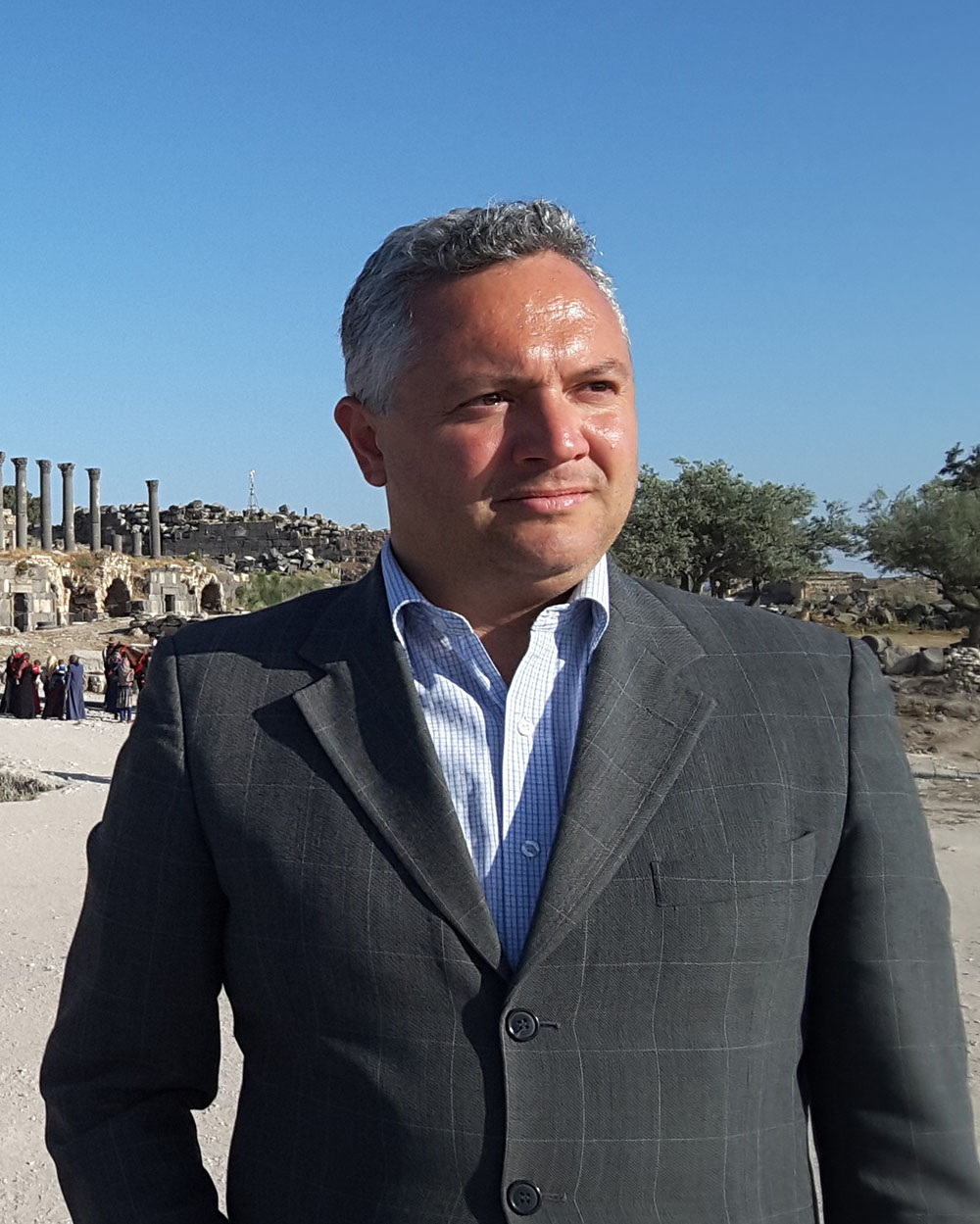
Borg also shared how research supported through the Xjenza Malta–TÜBİTAK programme allows for research concepts to move towards practical industrial relevance:
The high innovation and development of new products based on waste refers to a practical solution for industry and supports sustainable construction practice. This strengthened the research development and outputs of the research due to their potential for industrial application. In fact, 3D-printed geopolymer concrete attracted significant interest from industry, and the pilot projects are further strengthening the partners’ position in ensuring effective communication of the results obtained.
Building Long-Term Research Partnerships
The Programme is also intended to establish lasting links between Malta and Türkiye’s R&I communities. Bringing together public entities, universities, research organisations, and private enterprises enables participants to exchange expertise, develop international networks and build experience that can support participation in larger European and international research programmes. Private-sector involvement is particularly important in connecting scientific research with practical applications. By enabling companies to participate directly in international R&I collaborations, the Programme can help businesses build their own research capabilities while creating opportunities for technologies and ideas with commercialisation potential.
For participants, the value of a funded project can extend well beyond its formal end date. The collaborations established through the Programme can lay the groundwork for further joint proposals, researcher exchanges and publications, while creating new opportunities for research, technology transfer and international funding. An example of this is the project titled ‘A Complete Sustainable Greener Route for the Utilisation of Olive Pomace: Production of Bioactive Spurt Inhibitors and Alternative Proteins – SUSTAINOLIVE’, funded through the fourth Xjenza Malta–TÜBİTAK Joint Call for R&I Proposals.
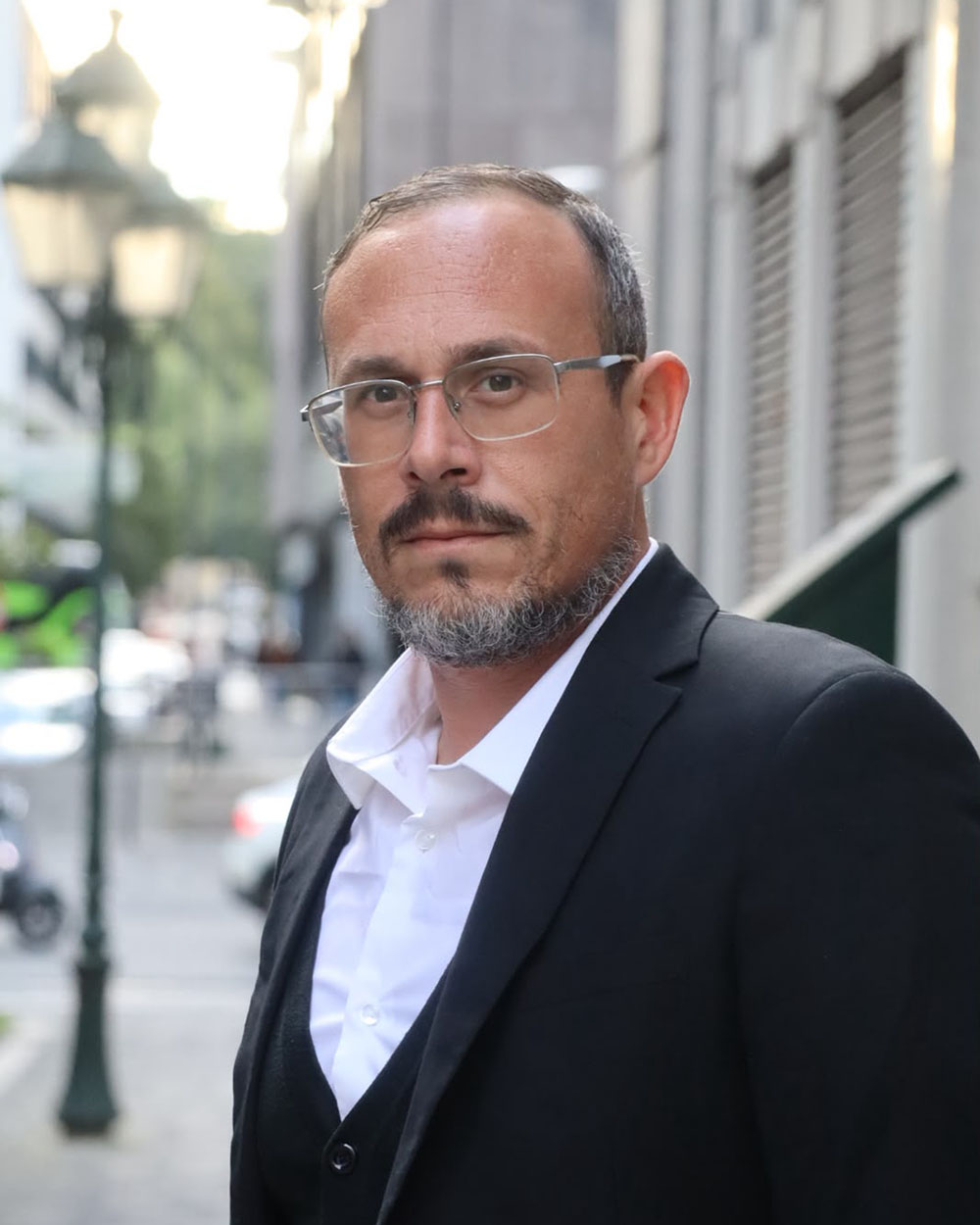
We see this collaboration continuing well beyond the duration of the project through future joint research proposals, staff exchanges, and scientific publications. The partnership has established a strong foundation for expanding research into sustainable extraction technologies, functional food ingredients, alternative proteins, and other high-value products derived from agri-food by-products. It has also strengthened our international research network and created new opportunities for technology transfer, innovation, and participation in future Horizon Europe and other international funding programmes.
— Dr Frederick Lia, Principal Investigator, SUSTAINOLIVE
The Programme has continued to evolve through its sixth Joint Call, launched in 2026. Against this backdrop, the kick-off meeting held on 28 July 2026 represents more than just the formal launch of the five individual projects. It marks another stage in a research partnership that has developed steadily since 2020, expanding from Mediterranean challenges related to water, agriculture and food, into a wider platform for scientific and technological cooperation.
Through its Internationalisation Unit, Xjenza Malta places international collaboration at the heart of its approach to R&I. The Unit connects Malta-based researchers and organisations with international partners, enabling them to exchange knowledge, combine expertise, access new opportunities and develop solutions to shared challenges. This commitment extends across Xjenza Malta’s programmes and wider work, strengthening Malta’s participation and visibility within the global R&I community, while supporting research outcomes that generate lasting economic and societal value.




Comments are closed for this article!