
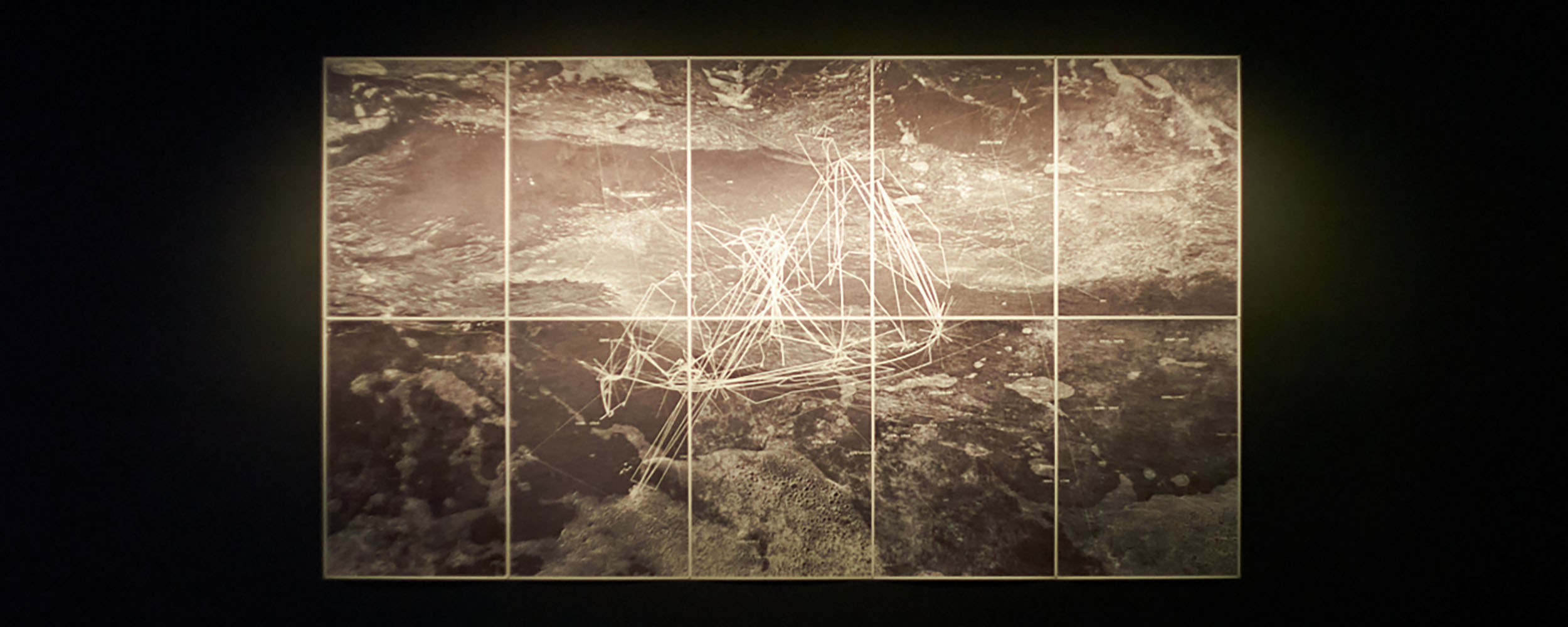
Curated by Elyse Tonna with artist Dr Matthew Attard, ‘The Ship (Unseen)’ delivers the same brilliance and deep artistic intent which Attard, Tonna, and the rest of the team had been praised for during the 60th Venice Biennale. In 2025, the two sought to continue building on the themes of connection, identity, and memory established in ‘I Will Follow the Ship’, making use once again of that iconic, ever-moving, web-like linework.
‘The Ship (Unseen)’ derives itself from Attard’s ‘I Will Follow the Ship’, taking on a familiar yet renewed meaning to its predecessor: where once Maltese heritage took prominence at the 2024 Venice Biennale, a similar spectacle – ‘The Ship (Unseen)’ – made its appearance at the Inquisitor’s Palace in Vittoriosa until January 2026.
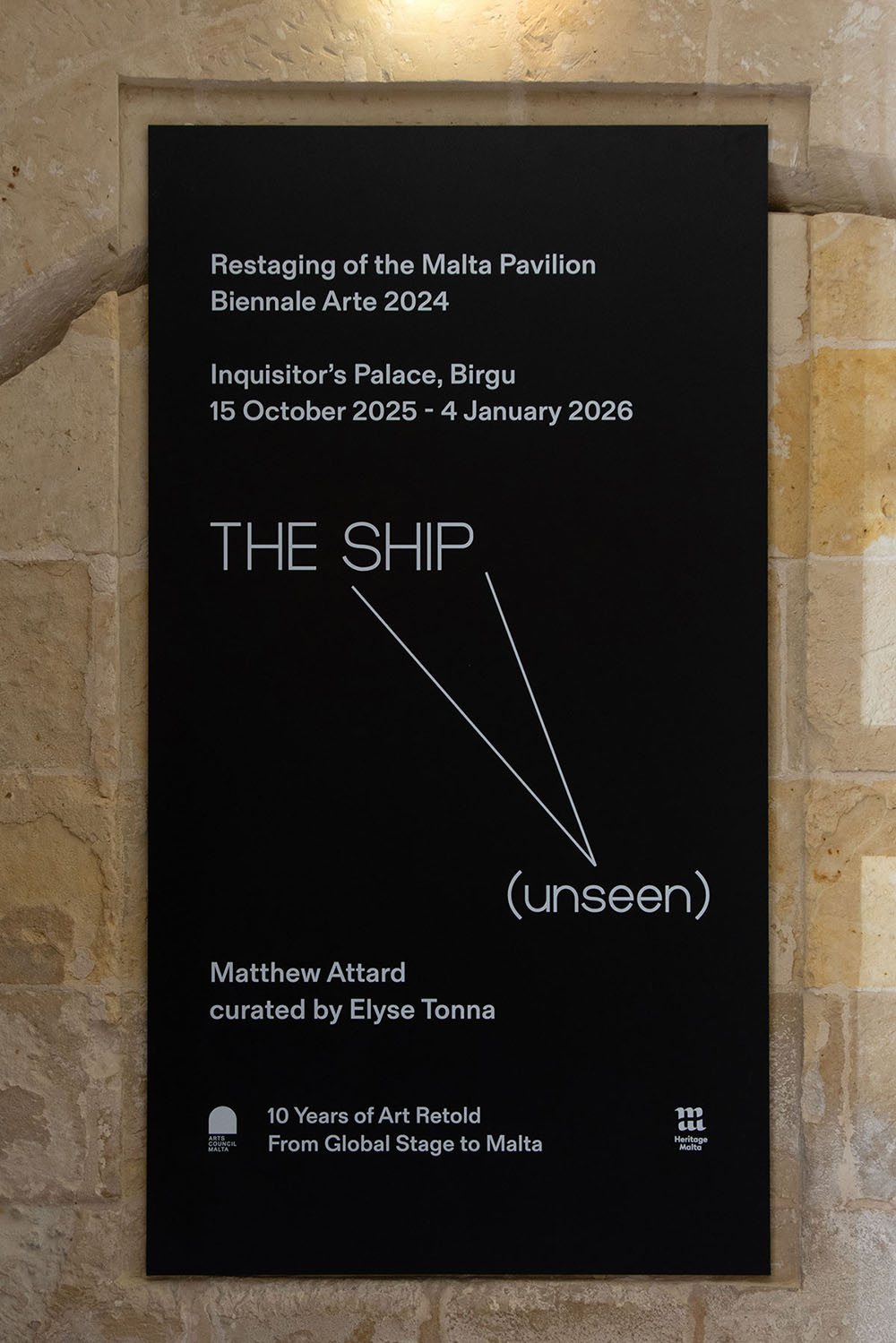
This marks another entry in Arts Council Malta’s (ACM) ‘Retold’ project. During the launch event, Luke Dalli (Executive Chairman of ACM) noted that this project ‘aims to bring exhibitions that honour Malta on an international level back to Malta itself’. In particular, this refers to projects by Maltese artists which have been featured in past editions of the Venice Biennale and the London Design Biennale. In this way, the Maltese people have the valuable opportunity to easily experience these pivotal works of Malta’s own artistic heritage. Moreover, due to the location of ‘The Ship (Unseen)’, a new context embedded itself in the artistic intention of Attard’s exhibition.
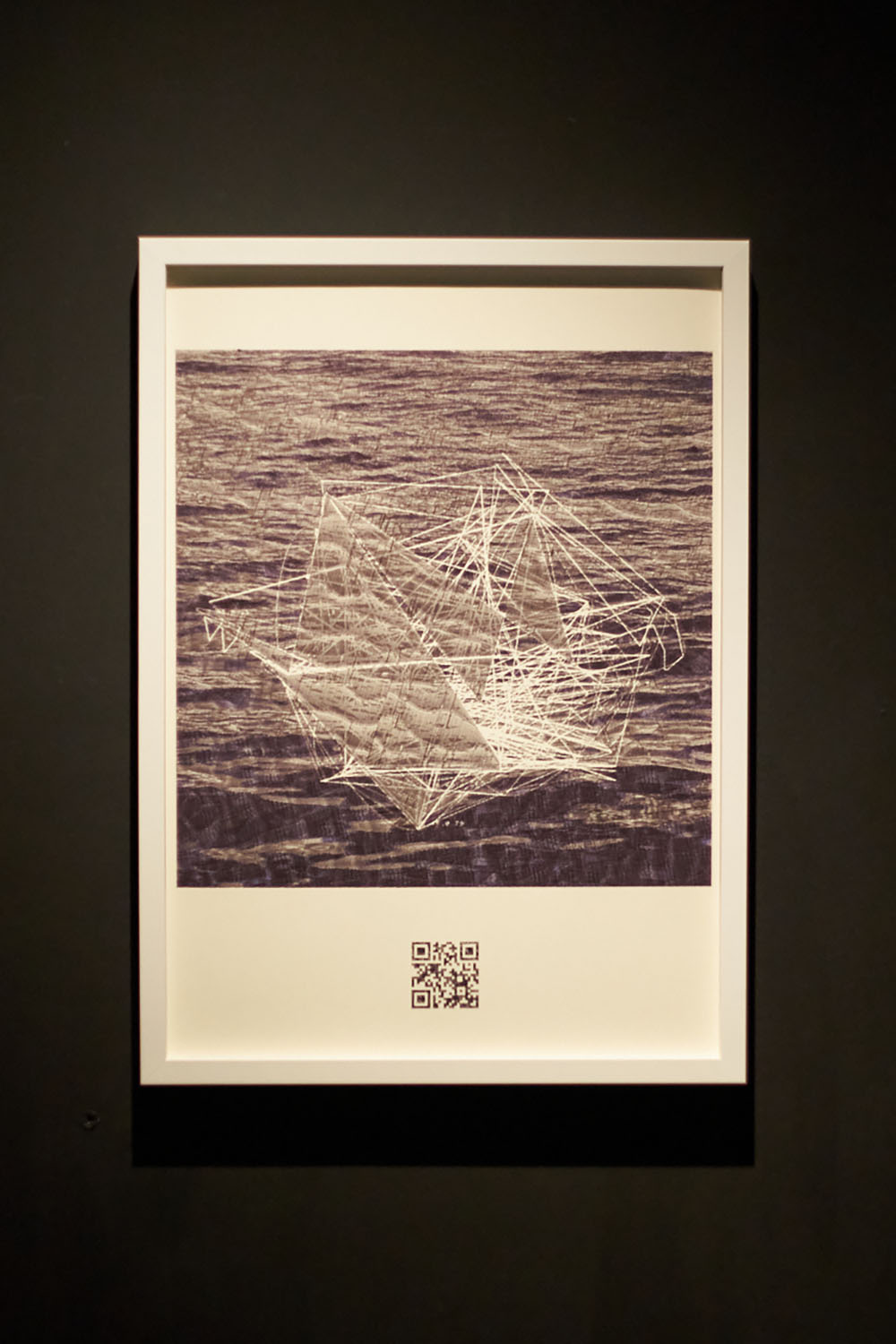
The Ship (Unseen) poster as part of Arts Council Malta’s Retold project (Photo courtesy of Matthew Attard)
With Attard’s ship drawings being located in the Inquisitor’s palace, in a space ‘shaped by surveillance, fate and testimony’, as Tonna describes it, the ship as a symbol became both seen and unseen – a vessel that carries memory from stone to image, from devotion to data, from past to present. Connection, then, seems to be a central theme to ‘The Ship (Unseen)’. The exhibition thus unveiled an unseen past, shedding light on the lives of those who came before us through the quiet gestures they left behind.
Ephemeral Yet Enduring
In the land of Judea, as in Oscar Wilde’s Salomé, the princess Salomé restlessly enamours herself for a chained Iokanaan. This ‘love’ is a petty thing, light in meaning, and may fizzle out as quickly as the fascination that caused it. It should be temporary. Yet when Iokanaan is beheaded, Salomé’s enamouration leads her to a public wickedness. She kisses the severed head of her love, horrifying her father, who condemns her to death. Her love, albeit once perhaps momentary, now persists in its effect through the complications it has produced. It has led her to the very permanent state of death. The temporary thus paves the way for the permanent. An absence turns to presence. A right becomes wrong. The nature of Salomé’s love is ephemeral yet enduring.
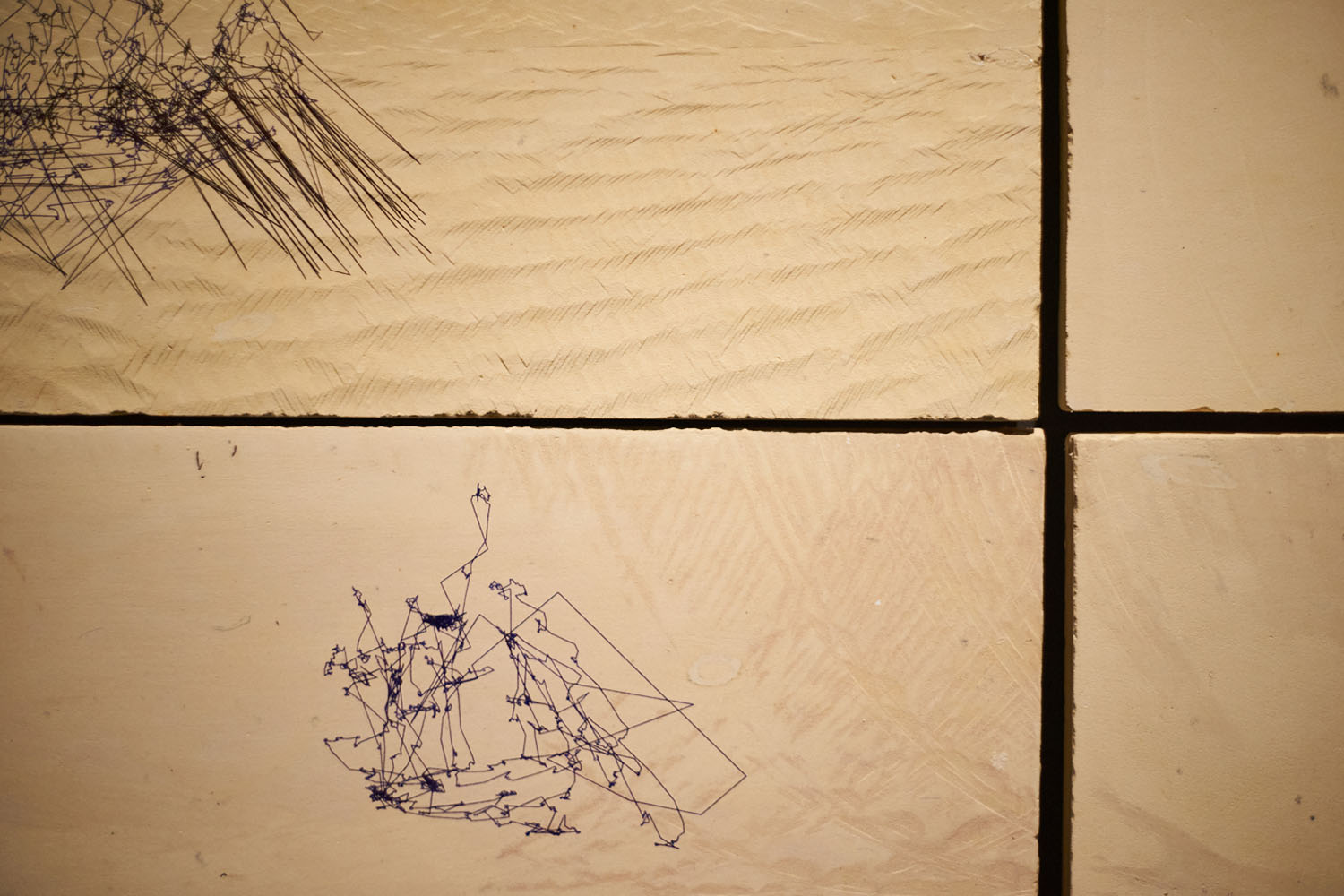
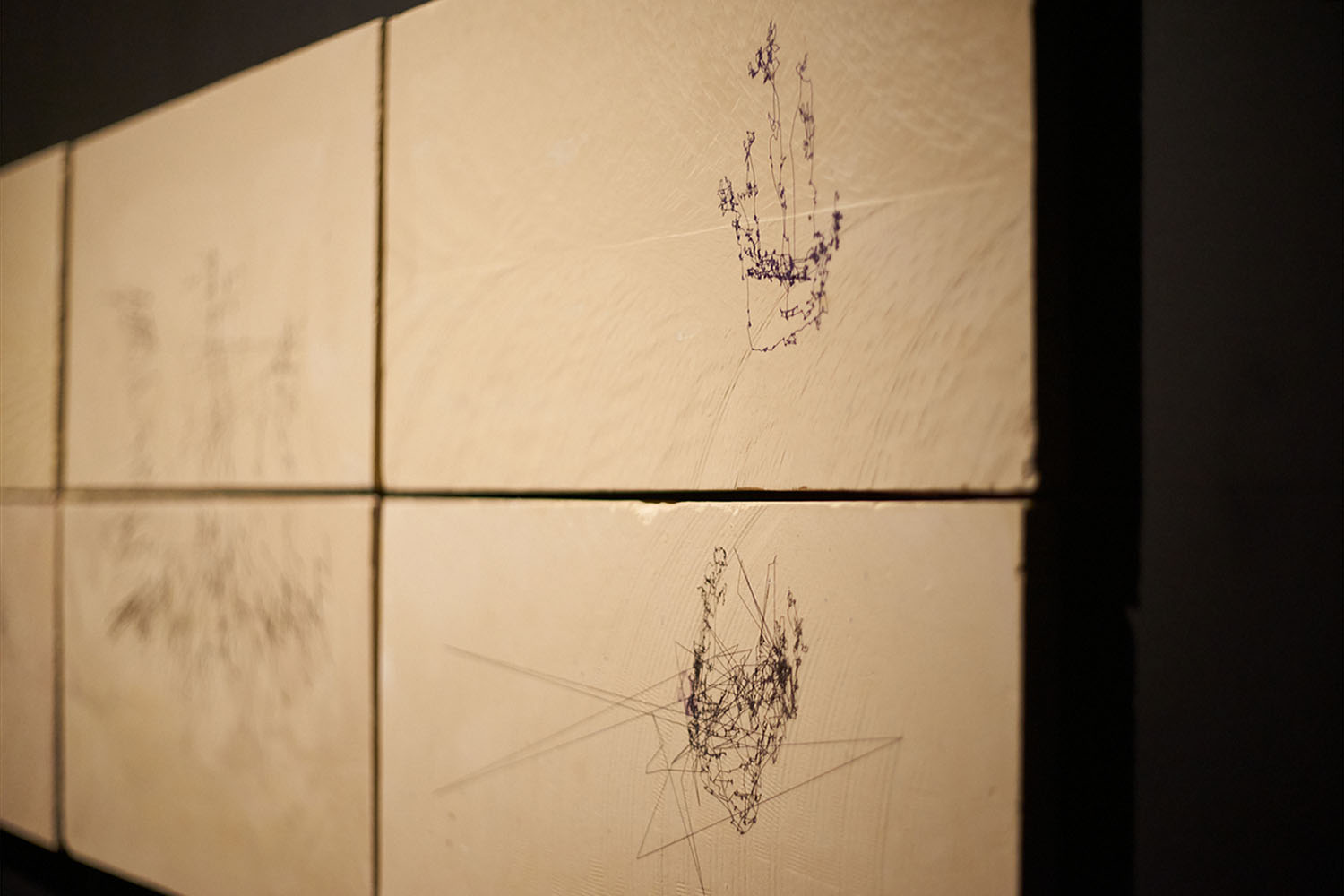
‘Ephemeral yet enduring’ is how Elyse Tonna describes the ship graffiti from which ‘The Ship (Unseen)’ draws its inspiration. Having once been etched on stone by sailors, prisoners or their families, these drawings are the quiet gestures which hold a memory of the people who were here before us. These etched markings pave a way to the past, breeding connection and strengthening our own cultural heritage. There is no wickedness in the purpose of these drawings. Rather, the link to Salomé has been made on the case of love – a love to connect. In the princess’s case, her love connected her with Iokanaan, even delivering her to death with him. In our case, the ship graffiti evokes a strong bond with our ancestors, delivering a piece of them into the present, and to us.
Lively Technology
In Philip K. Dick’s Do Androids Dream of Electric Sheep?, the android Luba Luft is fascinated by the drawing of a young girl at an art exhibition of Edvard Munch. The author describes the android as being ‘absorbed in the picture’, moved by the ‘groping awe’ imprinted on the girl’s face in the painting. In Luba’s feelings to the painting lies one crux of the novel – technology can be made to feel (or at least just emulate) humanity. The other crux would be that humans themselves may fail in this regard, but that discussion may take place another time.
In Matthew Attard’s ‘The Ship (Unseen)’, eye-tracking technology is used to interpret the man-made etchings of ship graffiti. This technology does emulate humanity, but Attard wants us to see beyond this. He wants us to see how technology can extend, rather than replace, the legacy of a person – how memory is prolonged through transformation and thus survives.
Like Luft with Munch, those who see Attard’s exhibition are meant to feel entranced and immersed in the atmosphere created. After the unveiling, I returned to view the numerous works present in the exhibition and realised a notable detail in the design of ‘The Ship (Unseen)’. Returning to this dark space, I was greeted by a quietness that gave way to chilling sound design. Jamie Barbara had been performing a piece that same night a few levels down in the palace, yet his work was present here too. I feel it paramount to say that the sounds peppered into the atmosphere added a whole other level to ‘The Ship (Unseen)’. I will describe it as a low, lingering scowl amplified in its reverberations, giving way to a steady jolt, like a heartbeat. There was a mesmerising effect to it. It turned the exhibition into a body, and the images present, either static or slowly dispersing, became like impressions of harmonised molecular movement.
Drawings as part of The Ship (Unseen) on Hahnemühle Baryta paper (Photo by Kim Sammut)
There are many ships to be made from the linework of Matthew Attard, but perhaps the ship unseen is the ship as body – the body that etched these markings a long time ago, and the body that now witnesses these markings at present, transformed yet still recognisable. It is perhaps in acknowledging the memory of these past folk that the unseen becomes seen.
The Mark is Made
Although ‘The Ship (Unseen)’ was just a small glimpse of the large-scale Malta pavilion presented at the 2024 Venice Biennale, it undoubtedly served as an effective continuation of Attard’s exploration of the convergence between digital technology and contemporary drawing. Experiencing this in person made clear why ‘I Will Follow the Ship’ was recognised as one of the top ten exhibitions worldwide in 2024.
It is interesting to me that this all originally began when Attard wanted to investigate how the mere act of looking could become a form of mark-making. Attard believed that the eye could be a powerful enough tool that, whatever it viewed, it could leave its mark on. Now, I say with confidence that he has left his own mark in the eyes of many – a mark that undoubtedly leaves a deep impression.
Attard’s pen-plotted artwork using sophisticated eye-tracking technology (Photos by Kim Sammut)
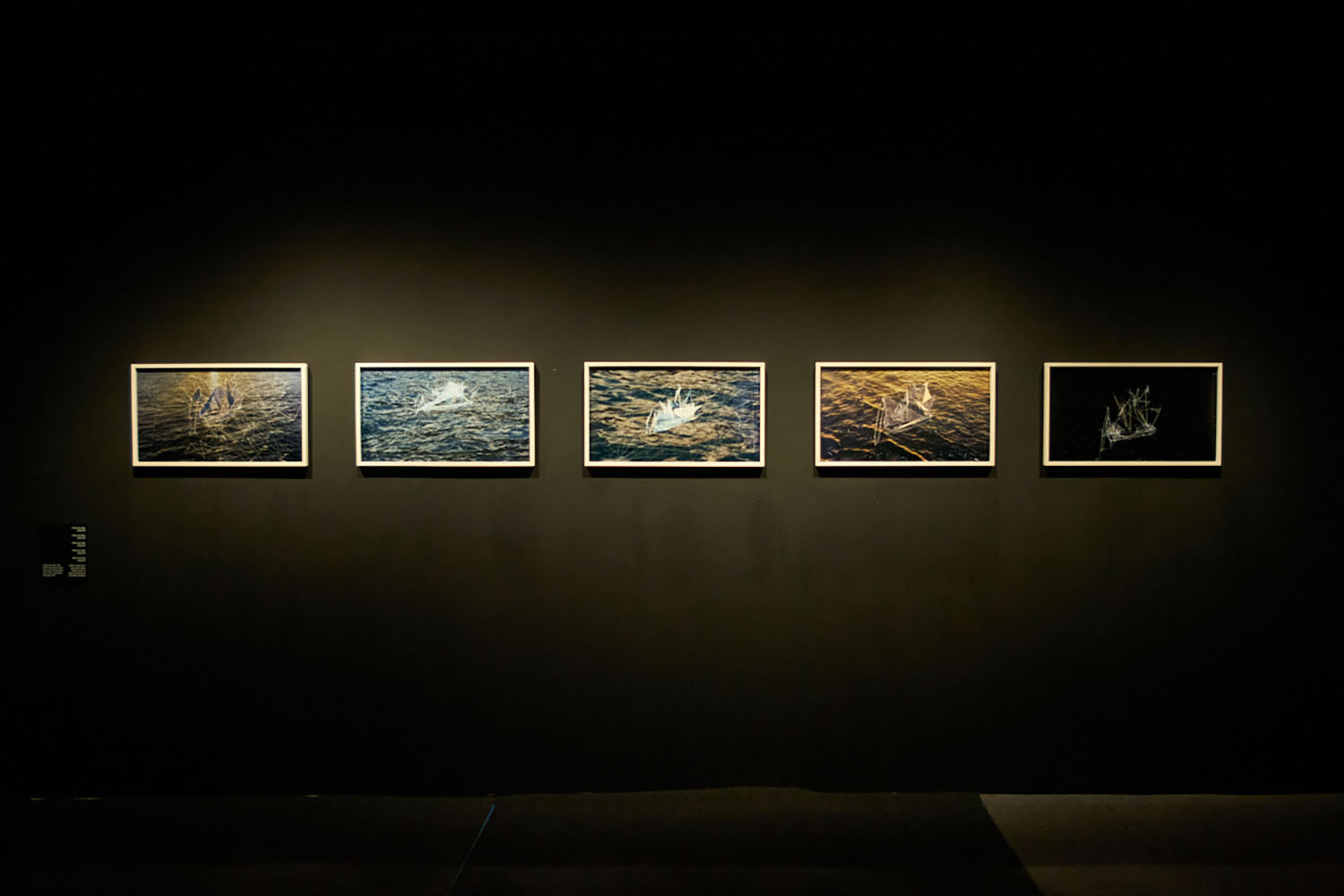
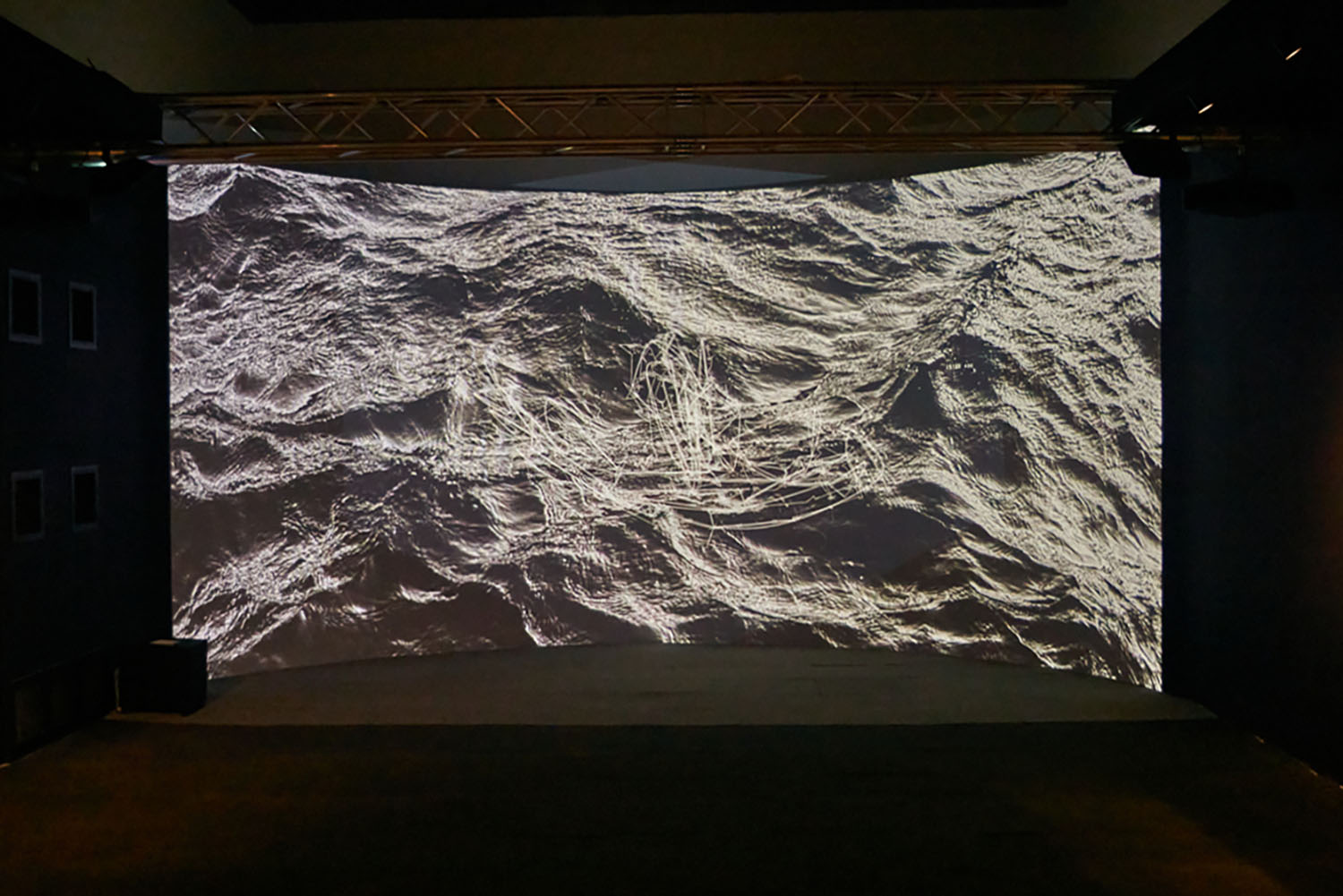
‘The Ship (Unseen)’ was hosted at the Inquisitor’s Palace, Vittoriosa, between 14 October 2025 and 4 January 2026. Those interested in Maltese maritime heritage will find particular delight in Attard’s drawings, all of which have been pen-plotted using sophisticated eye-tracking technology. The drawings marked on Globigerina Limestone made a return from their debut at the 2024 Venice Biennale, while the drawings presented on Hahnemühle Baryta paper are the 2025 additions exclusive to ‘The Ship (Unseen)’.
Discover the story behind I Will Follow the Ship from its initial concept to its journey representing Malta at the Venice Biennale: https://thinkmagazine.mt/budding-biennale/




Comments are closed for this article!