
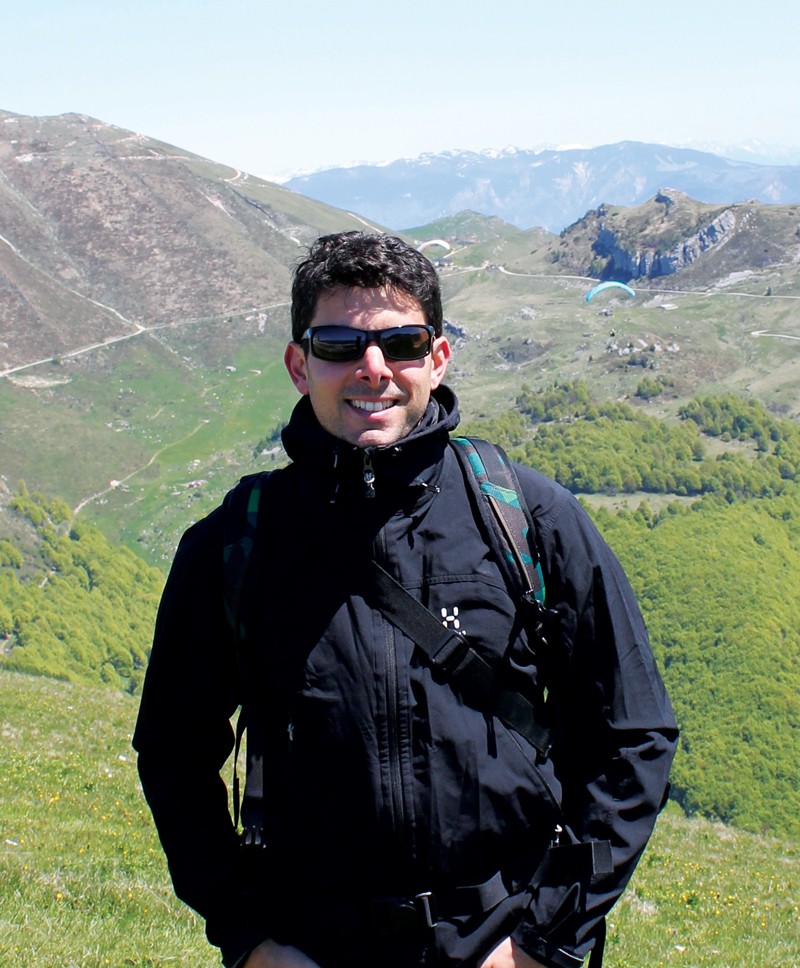
Dr Alain Camilleri talks to us about his life journey from Malta to patent examiner in Munich
In 1996 my journey began with my undergraduate studies in Biology and Chemistry (University of Malta). Science was my natural choice as it constantly peaked my curiosity. It was my method to find out how machines, technology, and nature work. My undergraduate thesis was on plant biotechnology and I studied ways to grow endemic Maltese tree species in vitro in the lab.
After graduating in 2000 I moved to Basel, Switzerland, for an IAESTE traineeship. I worked at a big pharmaceutical company in nervous system pharmacology research. My research focused on testing molecules that enhanced or inhibited two brain neurotransmitter receptors, NMDA receptor and GABA-B receptor. The NMDA receptor is important in controlling synaptic plasticity and memory. The GABA-B receptor is implicated in a number of neurologic and psychiatric disorders.
Basel was a great experience both professionally and personally. As my first experience living abroad, I met trainees from all over the world and learnt about a new culture. It also sparked off my curiosity to study the brain and nervous system. Invaluably, I worked in the pharmaceutical industry, researched, and learnt about drug development.
Following my traineeship to continue working in nervous system research, I moved north to the Karolinska Institute (Stockholm, Sweden). I worked in a molecular neurobiology lab for 8 months, gaining further research experience making mice that lacked certain genes, staining tissues with antibodies to identify proteins, and more.
My journey then brought me to the University of Zurich in 2002. I began my Ph.D. in Prof. Christian Fuhrer’s lab. I used the neuromuscular junction, which is the connection between nerves and muscles, as a model to learn how the connections between neurons develop. Within this system, my research focused on studying the balancing act between two protein families: tyrosine kinases and phosphatases. My research revealed the importance played by the fine equilibrium between these two protein groups to form and stabilise neuromuscular synapses. I concluded my Ph.D. in 2006 and stayed on in the lab one year longer as a postdoctorate.
Then I moved into the patent field. I needed a new challenge but wanted to maintain a connection with science. Since 2007 I worked as a patent examiner at the European Patent Office in Munich, examining patents in the field of biopharmaceuticals. I love the mix between science and patent law. The legal side needed a little getting used to, but being a patent examiner has proven challenging and satisfying. I work with employees from 38 different countries using the three official languages English, French, and German. My job allows me a good work-life balance, allowing me time to enjoy sports, leisure activities, and time with my family, which I find essential to a balanced and happy life. •



Comments are closed for this article!